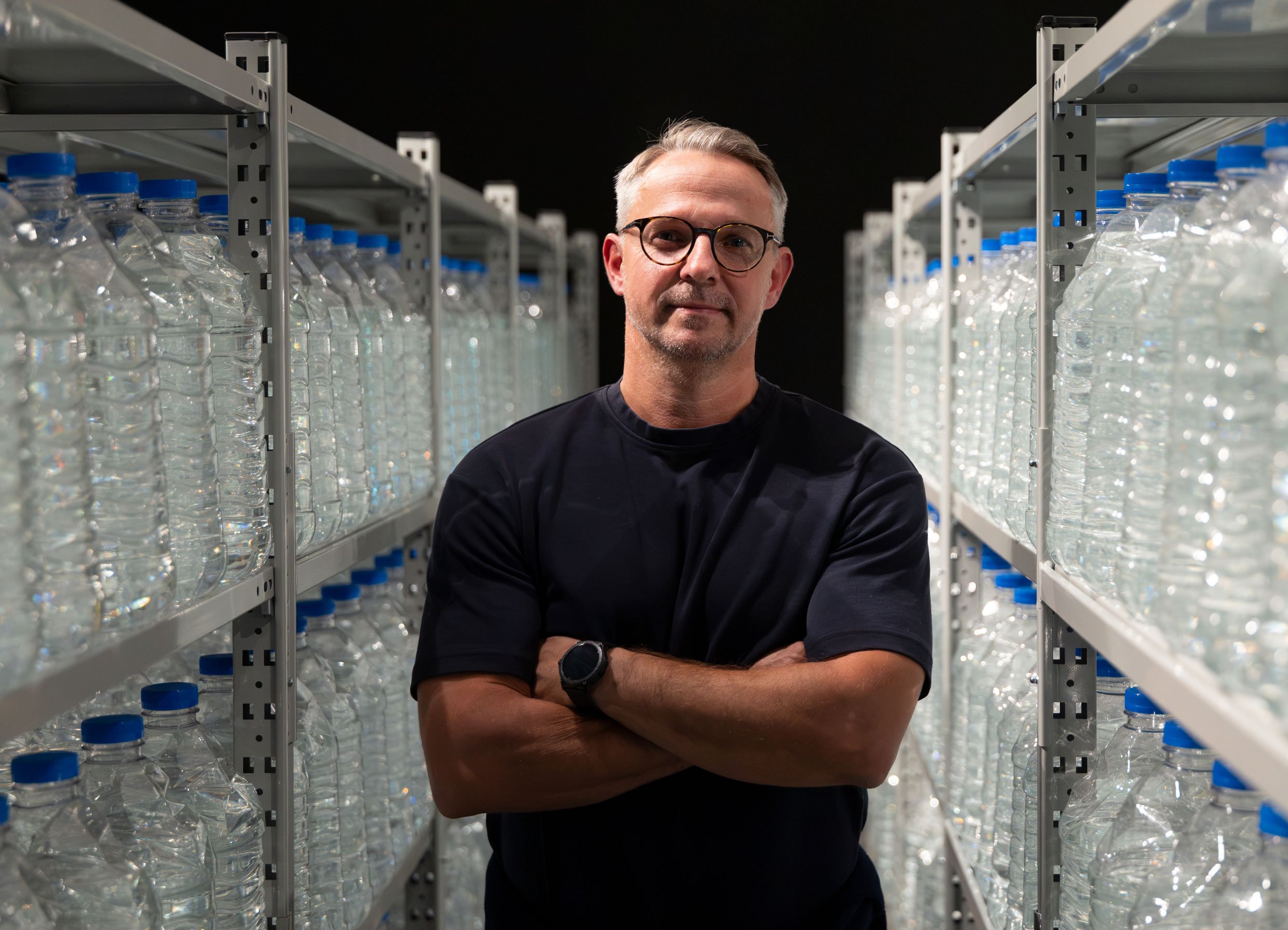
At the Museum of Contemporary Art in Zagreb, artist Ismar Čirkinagić explores the traces of political conflict and ecological devastation through natural materials. Drawing on more than two decades of artistic practice, his solo exhibition The Eighth Sea examines how nature bears witness to history, while asking what it means to lose our sense of direction in the contemporary world.
With over 20 years of artistic practice, Ismar Čirkinagić has explored the relationships between nature, memory and political history. Rooted in his personal experience of the war in Bosnia and Herzegovina, his artistic practice examines how conflict leaves traces that extend beyond human lives and into the natural world. In his solo exhibition The Eighth Sea, nature becomes both a material for artistic investigation and a witness to historical trauma.
About
Ismar Čirkinagić’s solo exhibition 'The Eighth Sea' is on view at the Museum of Contemporary Art in Zagreb until 8 November 2026. The exhibition is curated by Vesna Meštrić and Tijana Mišković. More information: msu.hr
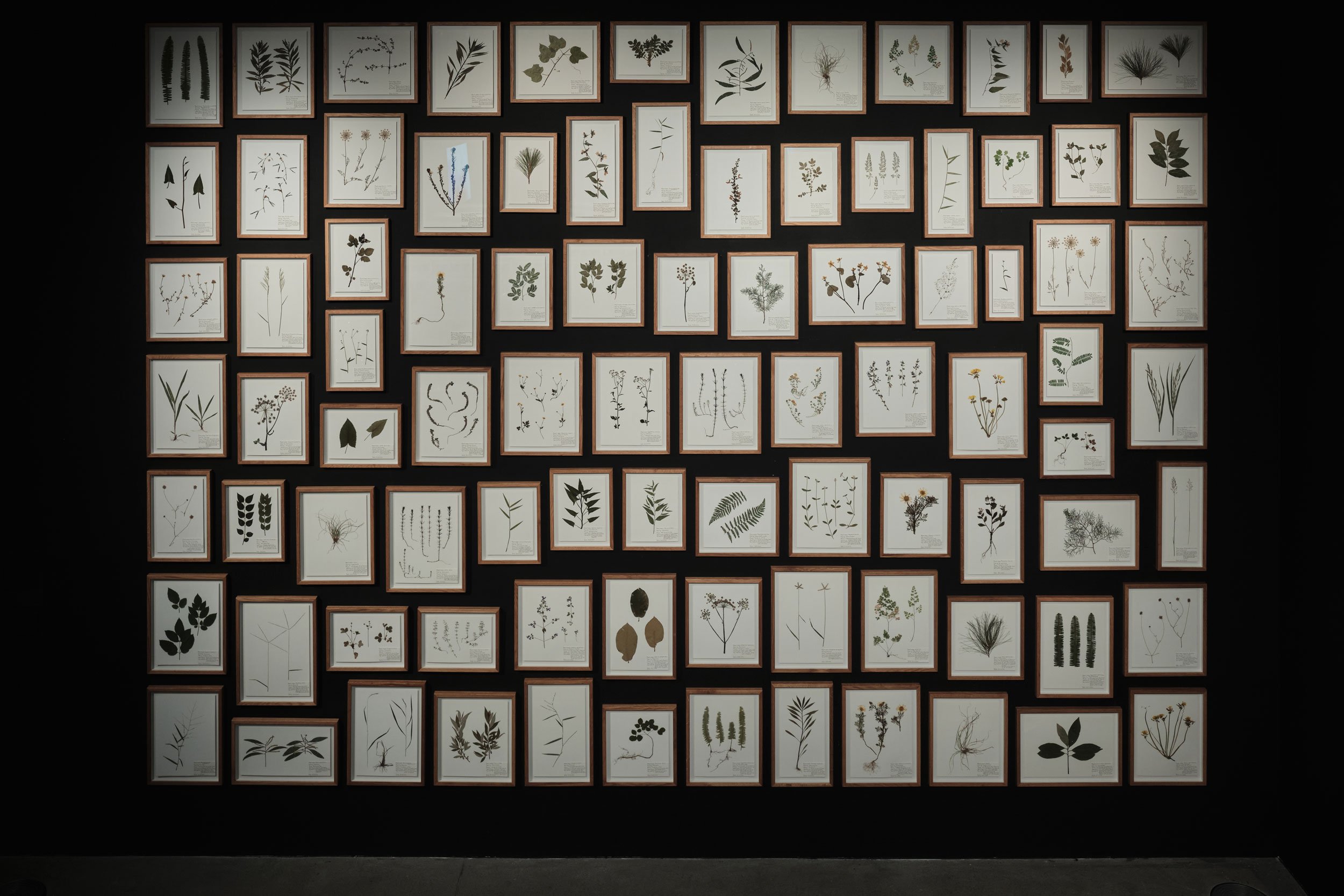
Ismar Čirkinagić: Herbarium, 2004–2022 / 2026. 90 herbarium sheets with plant specimens on acid-free paper, hand-written labels. Plants collected at sites of mass graves in Bosnia and Herzegovina, Mallorca, Guatemala, and Cambodia. Photo: Vanja Babić
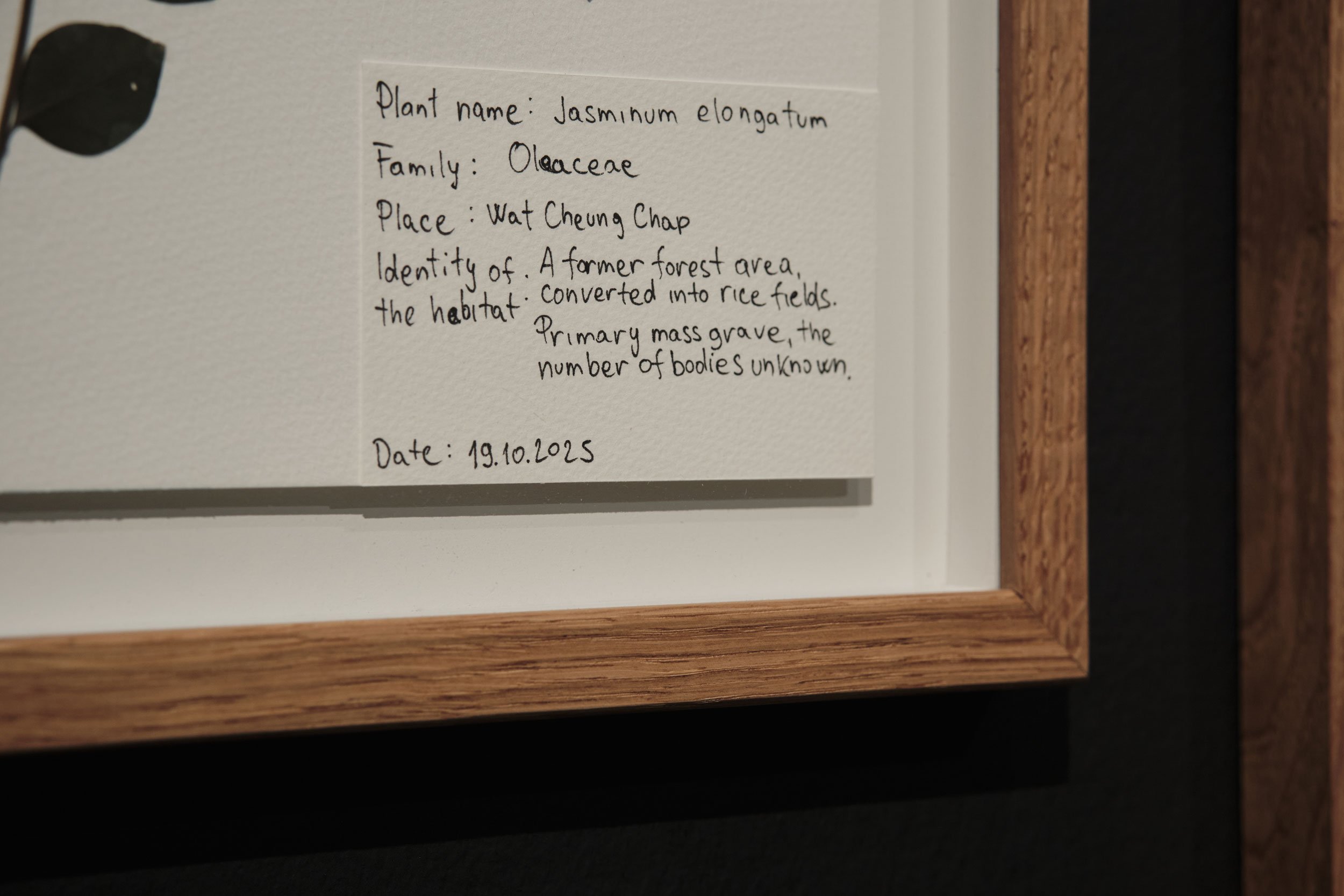
Ismar Čirkinagić: Herbarium, 2004–2022 / 2026. Detail. Photo: Vanja Babić
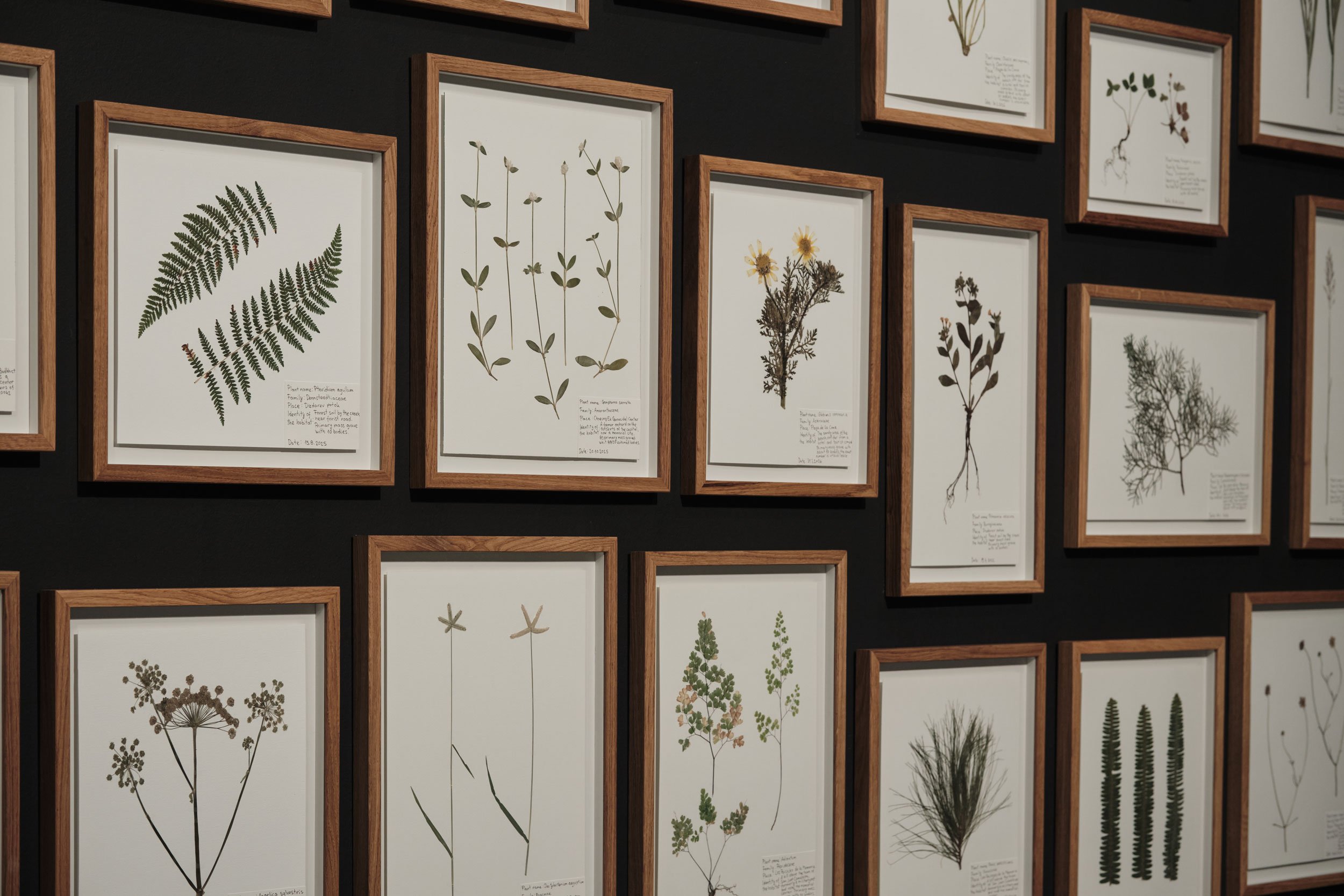
Ismar Čirkinagić: Herbarium, 2004–2022 / 2026. Detail. Photo: Vanja Babić
Rather than reconstructing specific events, Čirkinagić turns his attention to what remains. Plants, water and shells are collected from their natural environments and placed in new contexts, allowing their material presence to evoke histories and experiences that are not always immediately visible. His works bring together the poetic beauty of natural forms and the violence of human conflict, revealing how these seemingly opposing forces are intertwined.
Nature is not simply a backdrop against which history unfolds. It is a space in which the consequences of human actions accumulate, persist and transform. Through his work, Čirkinagić investigates what the natural world can tell us about the past – and what its condition reveals about the present.
Collecting and interpreting traces of history
Čirkinagić’s approach bears similarities to the methods of museums and archives. Collecting, classifying, conserving and exhibiting are central to his artistic process, but he uses these practices to question how objects acquire meaning and how histories are preserved and communicated.
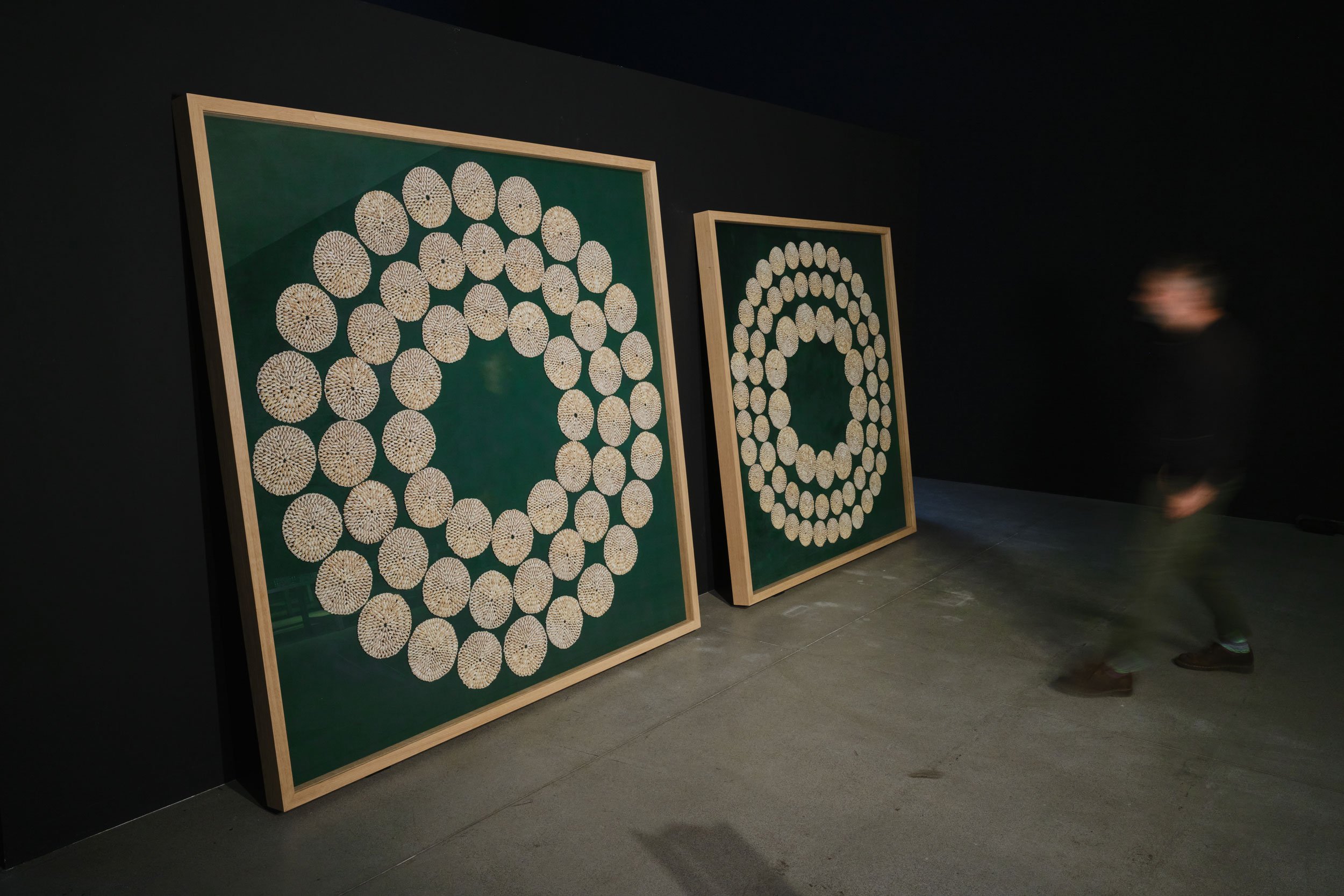
Ismar Čirkinagić: Circles of Devaluation, 2026. Shell coasters (Ø 16–20 cm) on textile-covered wooden panels. Photo: Vanja Babić
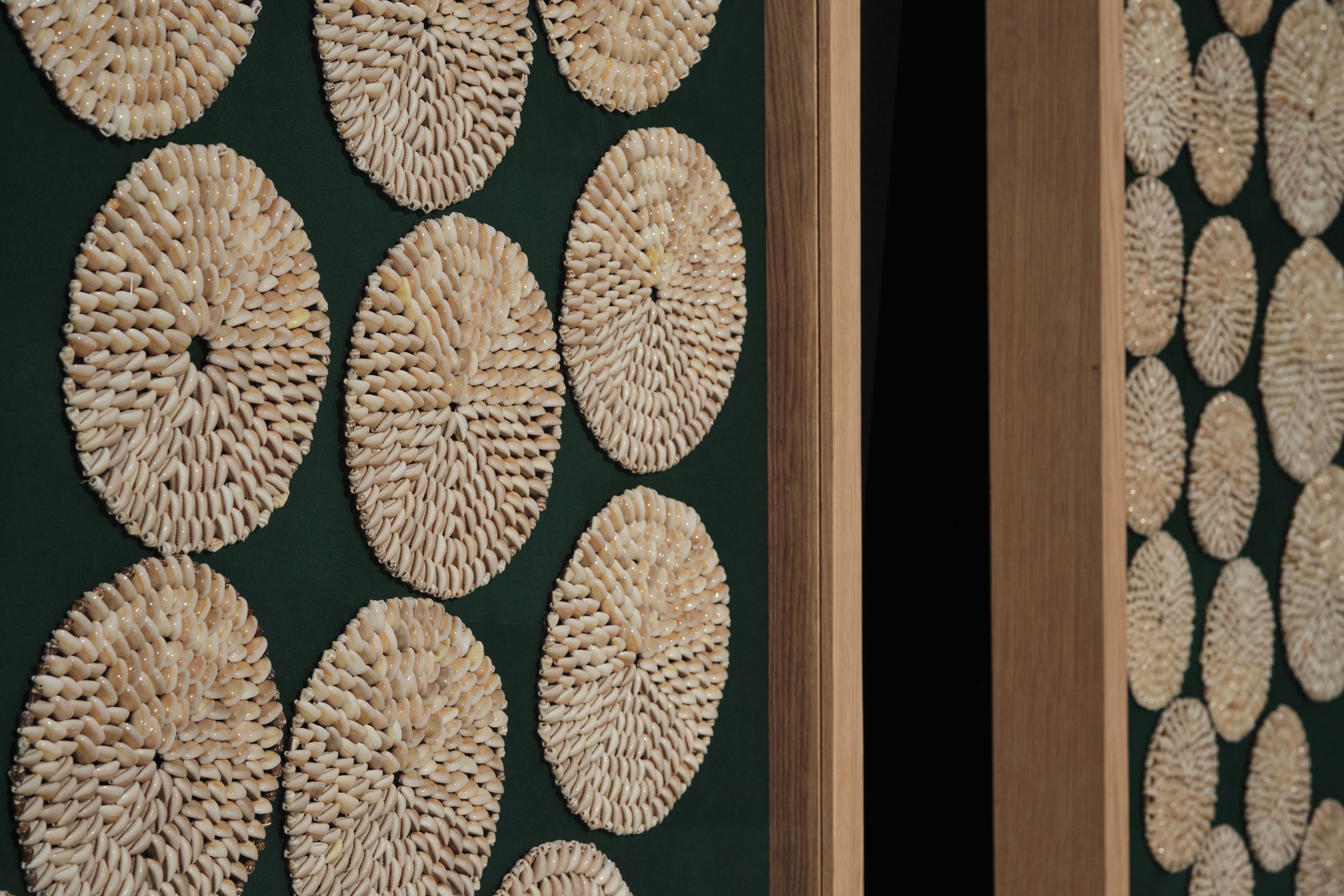
Ismar Čirkinagić: Circles of Devaluation, 2026. Detail. Photo: Vanja Babić
When a material is removed from its original environment and placed in an exhibition, its context changes. What was once part of a landscape becomes an object of observation and interpretation. For Čirkinagić, these transformations are never neutral. Every act of collecting or displaying involves choices that shape how an object is understood, which histories become visible and which remain obscured.
By moving natural materials beyond their familiar contexts, the artist encourages us to look at them differently. Their significance lies not only in what they are, but also in where they come from and what they have witnessed. In this way, his works become a means of exploring the relationship between individual experience and collective memory, as well as the systems through which we assign value to objects, places and histories.
These questions extend beyond the museum. They concern how societies remember conflict, how historical narratives are constructed and how the consequences of violence are acknowledged or overlooked.
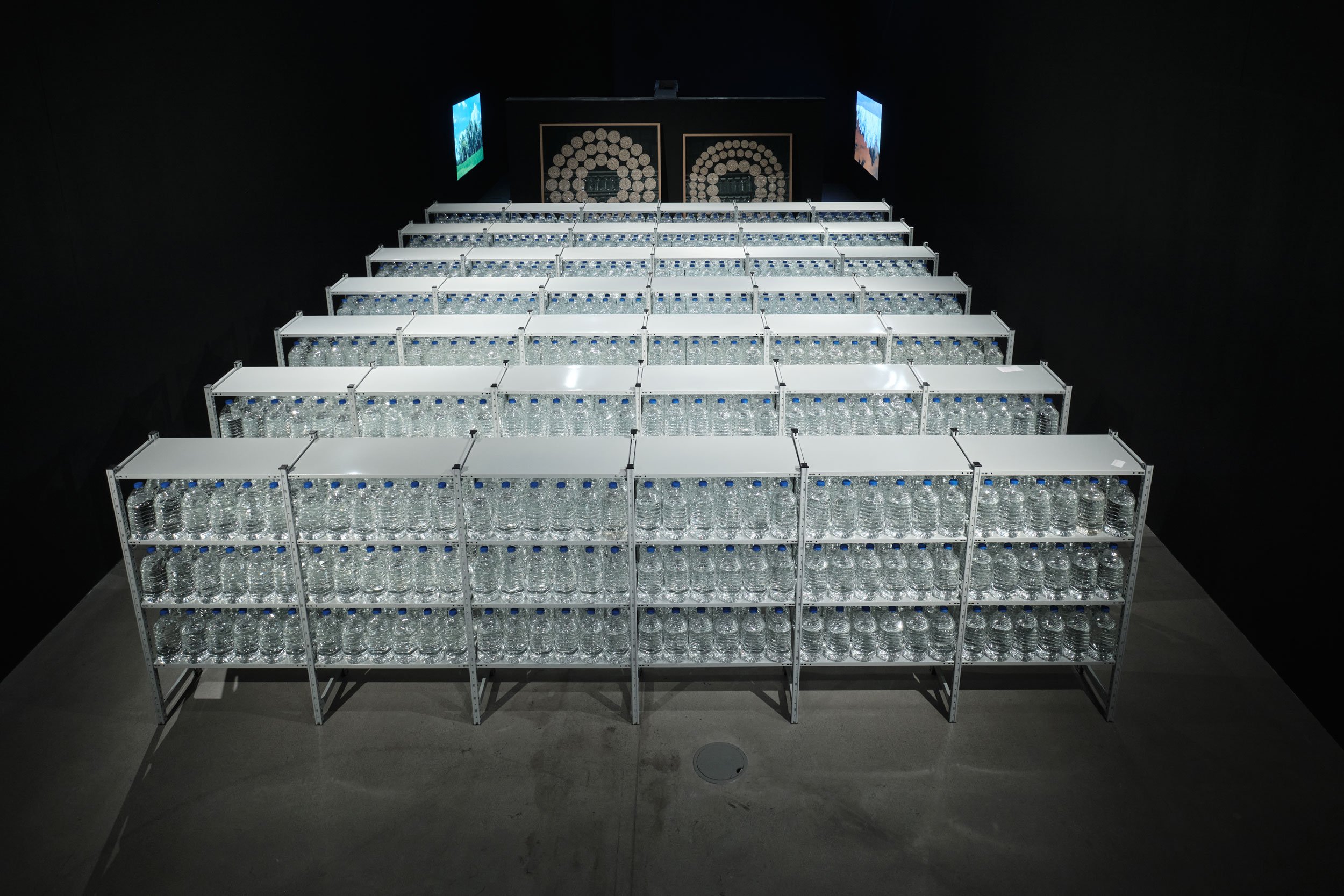
Ismar Čirkinagić: The Eighth Sea, 2026. Photo: Vanja Babić
A sea without coordinates
The title The Eighth Sea draws on the historical expression of the seven seas, often used as a metaphor for the entirety of the known world. Čirkinagić imagines an eighth sea that exists not as a geographical body of water, but as a mental landscape shaped by global crises, human greed and alienation.
Inspired in part by John Milton’s epic poem Paradise Lost, the exhibition reflects on humanity’s loss of orientation. While Milton approaches this question primarily through a religious lens, Čirkinagić adopts a predominantly ethical, political and cultural perspective, asking where we stand in a world marked by conflict, division and uncertainty.
Have we been expelled from Paradise, or has Paradise changed so radically that we can no longer recognise it? The question runs through the exhibition, prompting reflection on the distance between the world as we imagine it and the reality we have created.

Ismar Čirkinagić: The Eighth Sea, 2026. Detail (The Black Sea). Photo: Vanja Babić
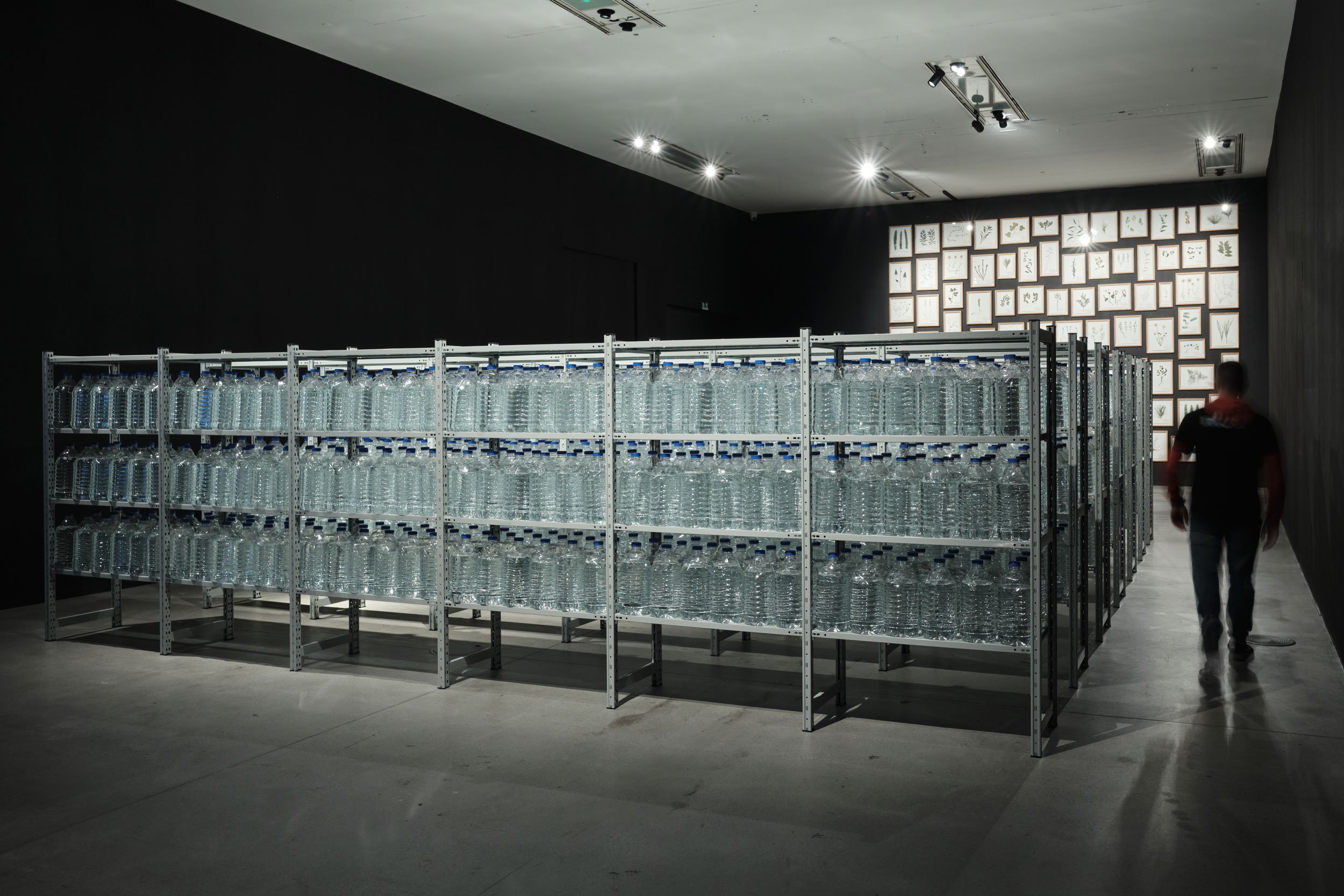
Ismar Čirkinagić: The Eighth Sea, 2026. Seven metal shelving units, five-litre plastic containers, seawater. Seawater from the North Sea, the Baltic Sea, the Adriatic Sea, the Black Sea, the Aegean Sea, the Mediterranean Sea, and the Atlantic Ocean. Photo: Vanja Babić
The imaginary eighth sea offers a symbolic geography for this condition. Without a fixed location or coordinates, it represents a world in which familiar points of reference have become unstable. Political conflict and ecological devastation are not isolated crises, but interconnected symptoms of a broader loss of direction.
Between beauty and devastation
Although The Eighth Sea presents new works, it also brings together recurring concerns that have shaped Čirkinagić’s practice for more than twenty years. Memory, violence, nature and geopolitics converge through his use of collected materials and his interest in the histories they carry.
His artistic language moves between the poetic and the critical. The quiet beauty of natural forms stands in contrast to the destruction associated with human conflict, creating a tension that resists easy conclusions. Rather than illustrating a particular historical event, the works reflect on the lasting effects of violence and the ways in which these effects become embedded in the world around us.
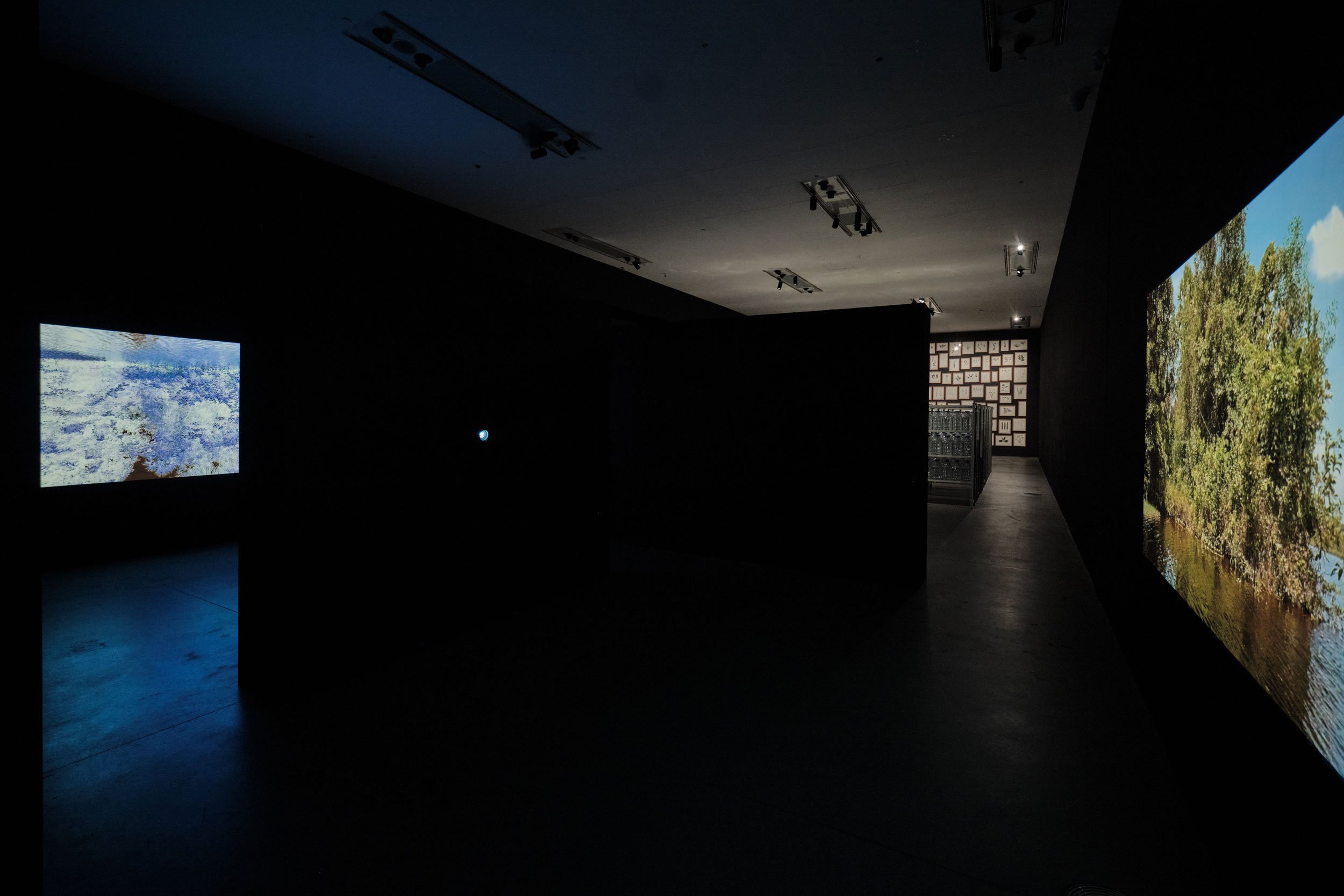
Ismar Čirkinagić: The Eighth Sea, exhibition view from Museum of Contemporary Art in Zagreb, 2026. Photo: Vanja Babić
In The Eighth Sea, the natural environment becomes a lens through which to examine contemporary reality. The materials on display connect personal memories with collective histories, while revealing how human-made systems shape our relationship with nature.
Ultimately, the exhibition asks us to reconsider what we recognise as evidence, how we understand the past and where we look for orientation in the present. In a world increasingly shaped by overlapping political and ecological crises, Čirkinagić’s imagined sea offers no clear destination. Instead, it confronts us with the uncertainty of our shared landscape – and the traces we leave behind.