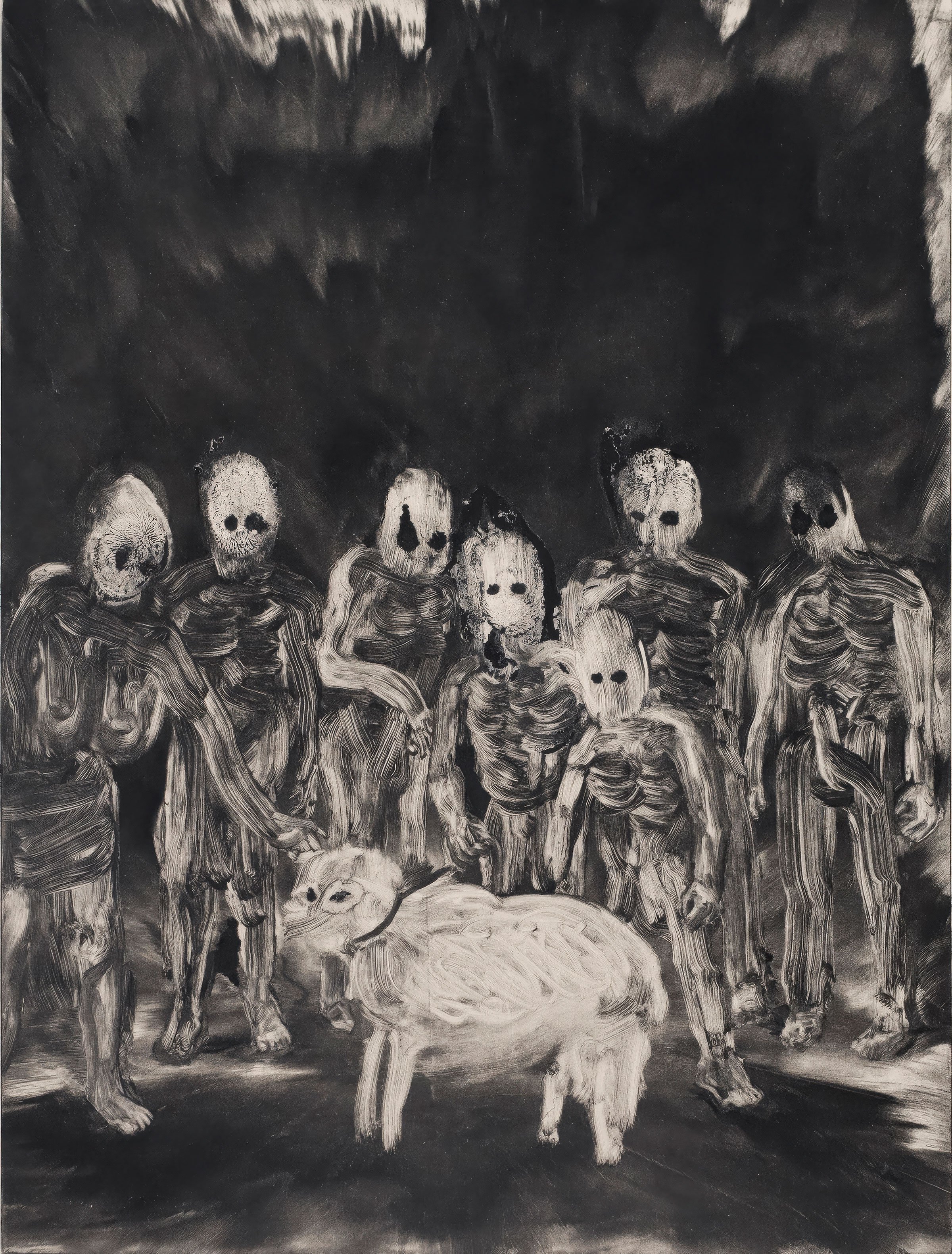
In the middle of a Finnish forest, 39-year-old Finnish artist Toni R. Toivonen is exploring one of art’s oldest questions: What remains when life is gone?
Toni R. Toivonen has spent the past decade developing a distinctive practice in which dead animals, metal, the body, transience and memory become artworks that exist somewhere between painting, sculpture and physical trace.
Toivonen is now presenting his work in Copenhagen in an exhibition at Wonderland Art Space in Vesterbro. Here, he is showing a lesser-known side of his practice: drawings, monotypes and new works in brass.
At the same time, his first comprehensive art book is being launched, bringing together around 12 years of artistic practice.
On this occasion, Simon Nygaard of Wonderland Art Space met with Toni R. Toivonen for a conversation about the forest, death and Copenhagen.
Toni, we have known each other since 2017, when we first met at CHART in Copenhagen. I remember being fascinated quite quickly by the way you worked. Not only by the works themselves, but by the entire universe around them. Do you remember our first meeting?
"Yes, I remember Copenhagen and CHART 2017 very clearly. It was an important time for me. My artistic process had just undergone a major change, and suddenly my work was being presented in a very different context. And there I met you.
Since then, our relationship has developed in a way that is probably not entirely conventional between an artist and a gallerist."
Since then, our relationship has developed in a way that is probably not entirely conventional between an artist and a gallerist."
No, probably not. I have visited you in the forest, worked with you on the film HEAVY, and even helped you pull dead animals across the brass plates. Not exactly the traditional gallery experience.
"No, but it’s nice how committed you are."
"But that is also something I like about our relationship. You haven't only seen the finished works. You have seen the process, the place and all the strange things that surround them."
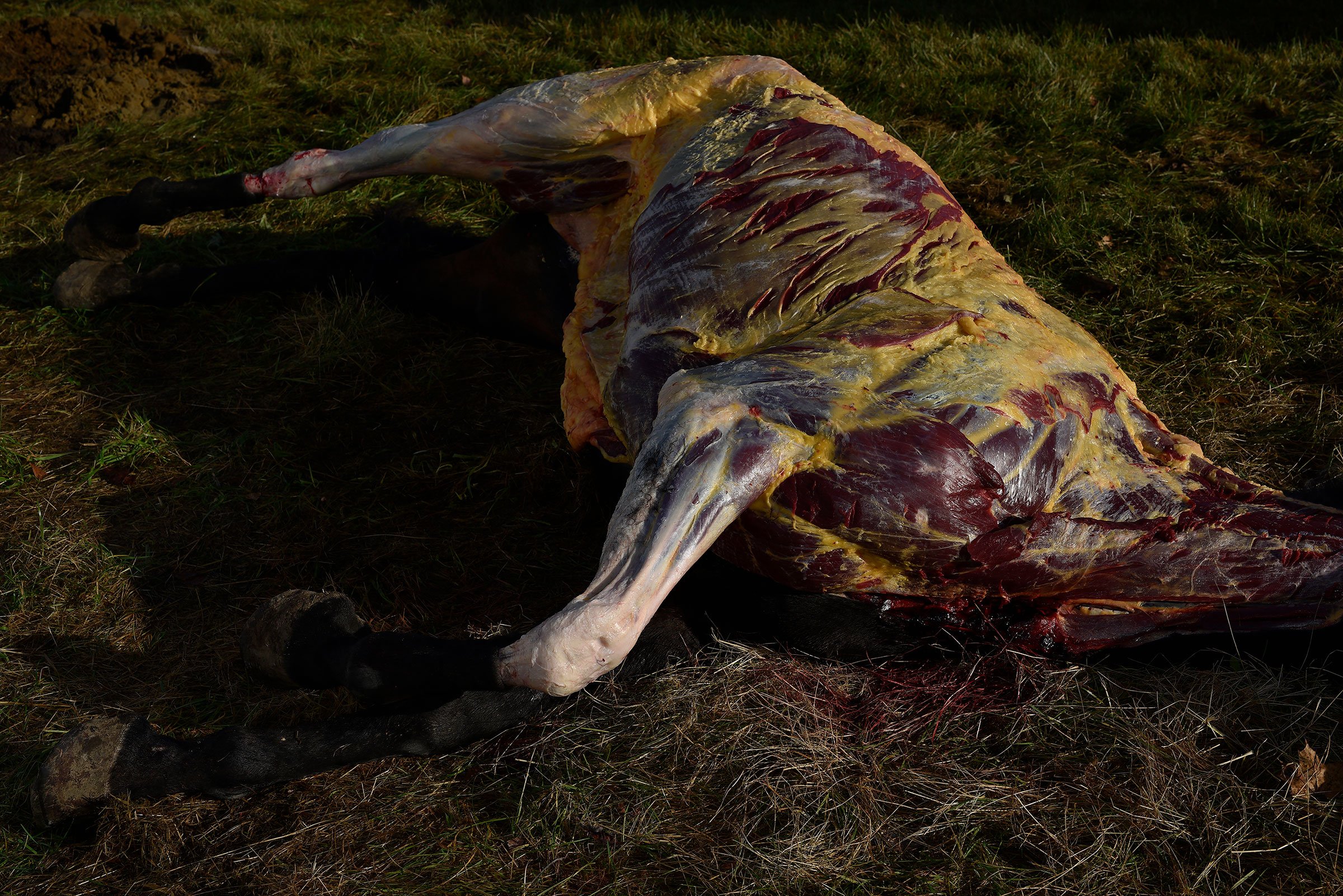
From the process. Photo: Toni R. Toivonen
When a Dead Animal Becomes a Work of Art
Toivonen is particularly known for his brass works, which are created through an unusual process.
He works with animals that have died naturally or from other causes – the animals are not killed for the sake of the art. The body is placed on a metal plate, where a slow process of fermentation and decomposition gradually leaves a physical imprint in the metal.
The finished work can resemble an abstract, almost painterly image.
But it is not an image of the animal.
It is a trace of the animal.
It is a trace of the animal.
Your brass works are probably what most people associate with you. You work with dead animals, but I have always felt that the works are not really about death.
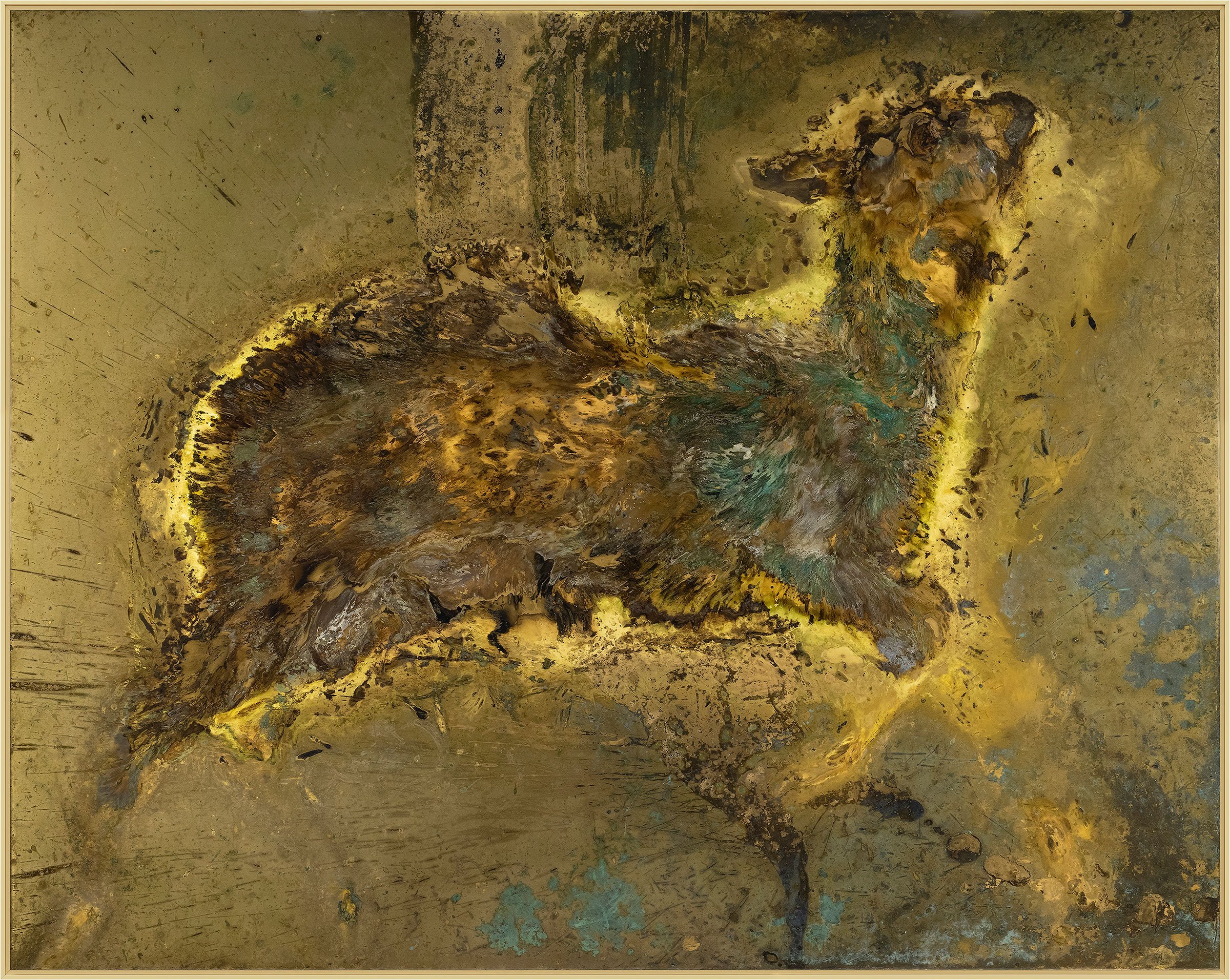
Toni R. Toivonen: Flickering Existence, Brass and original substances of a dead animal, 2026. Credit: Toni R. Toivonen
It’s not an image of the animal – it is the animal and its last presence in reality.
Toni R. Toivonen
"I agree. I guess they are mirroring life really. But death makes it visible."
“I work with animals that have died naturally – they are not killed for the art. The body is placed on a special metal plate, typically brass or copper, and through a slow process of decay, it leaves a physical trace.”
"What interests me is that the work doesn't become an illustration. It’s not an image of the animal – it is the animal and its last presence in reality.”
"It is about true presence. About what remains when something is no longer there. It’s about stretching the in-between part, the space and time between life and hereafter."
That is also something I think about when I look at your work. It is at once very physical and almost spiritual.
"Yes. Maybe because the process is real. There is only so much I control. I do have an overall image of what I want to say, but the animal has something to say as well within its intimate act of disappearance. I’m sort of the director of this play and the animal is my main actor."
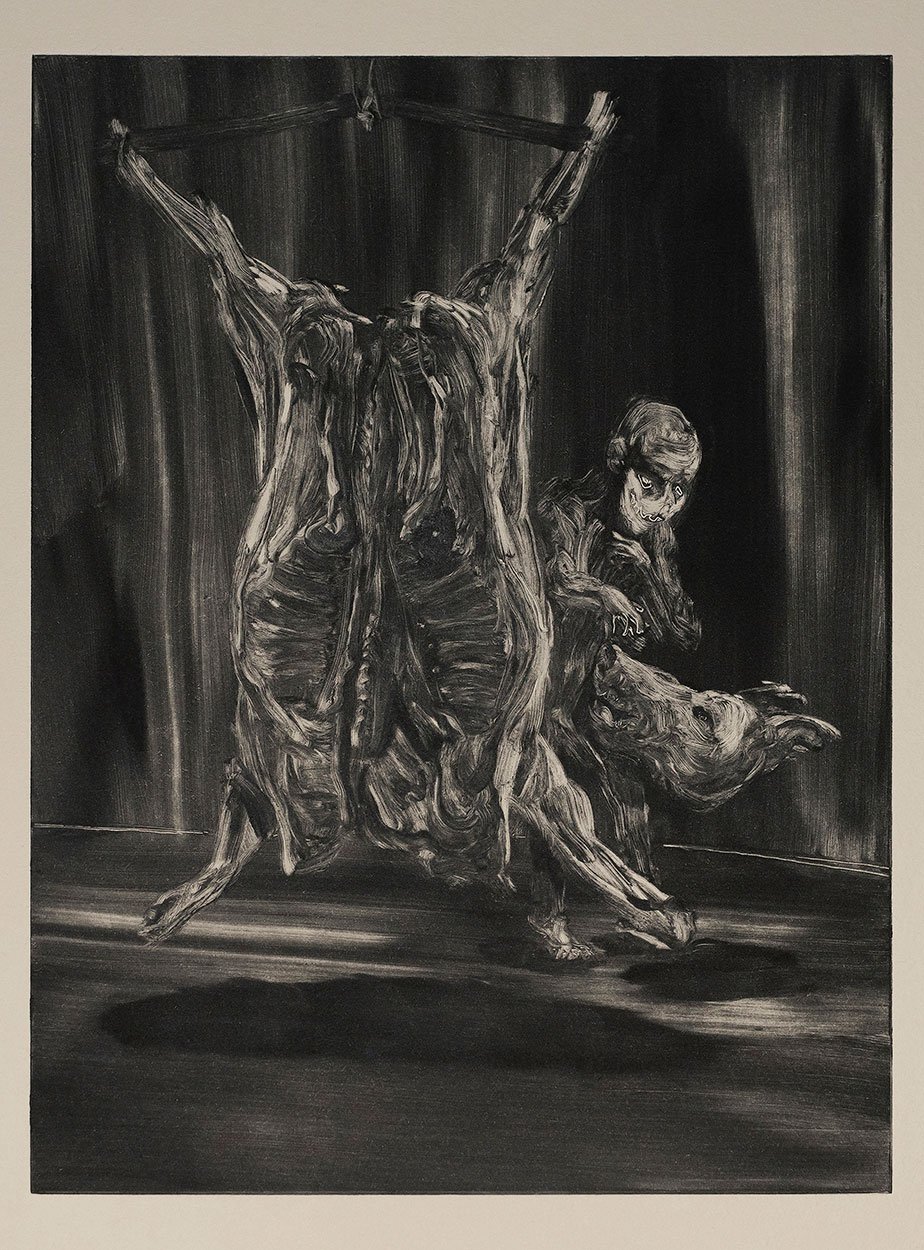
Toni R. Toivonen: Untitled, 2026. Credit: Toni R. Toivonen
Drawing Comes First
At Wonderland Art Space, audiences also have the opportunity to see a side of Toivonen’s practice that normally remains more private.
Although the brass works are what he is often associated with, the process begins elsewhere: with drawing.
The drawings are spontaneous and often dark. Human-like figures, animals and strange creatures appear and disappear. Some motifs can be recognised from his wider practice, while others seem to emerge from a more unconscious place.
The drawings are showing a side of your work that many people don't know. Why is the drawings important to you?
"Because the drawing comes first. I draw every day. I have done so since I was a child. It is how I think."
Some of the drawings are like diary entries. Others feel like dreams or nightmares. I’ve called them “a mad diary” and “semi-self-portraits”. They are very direct and often without a filter."
"I think you can see a lot of me in them that you don't so easily see in the larger brass works."
In the Middle of a Finnish Forest
Toivonen works from his home and studio in the middle of a Finnish forest, and nature is not a subject he needs to seek out.
The living and the dead exist side by side in his everyday life – and therefore in his art as well.
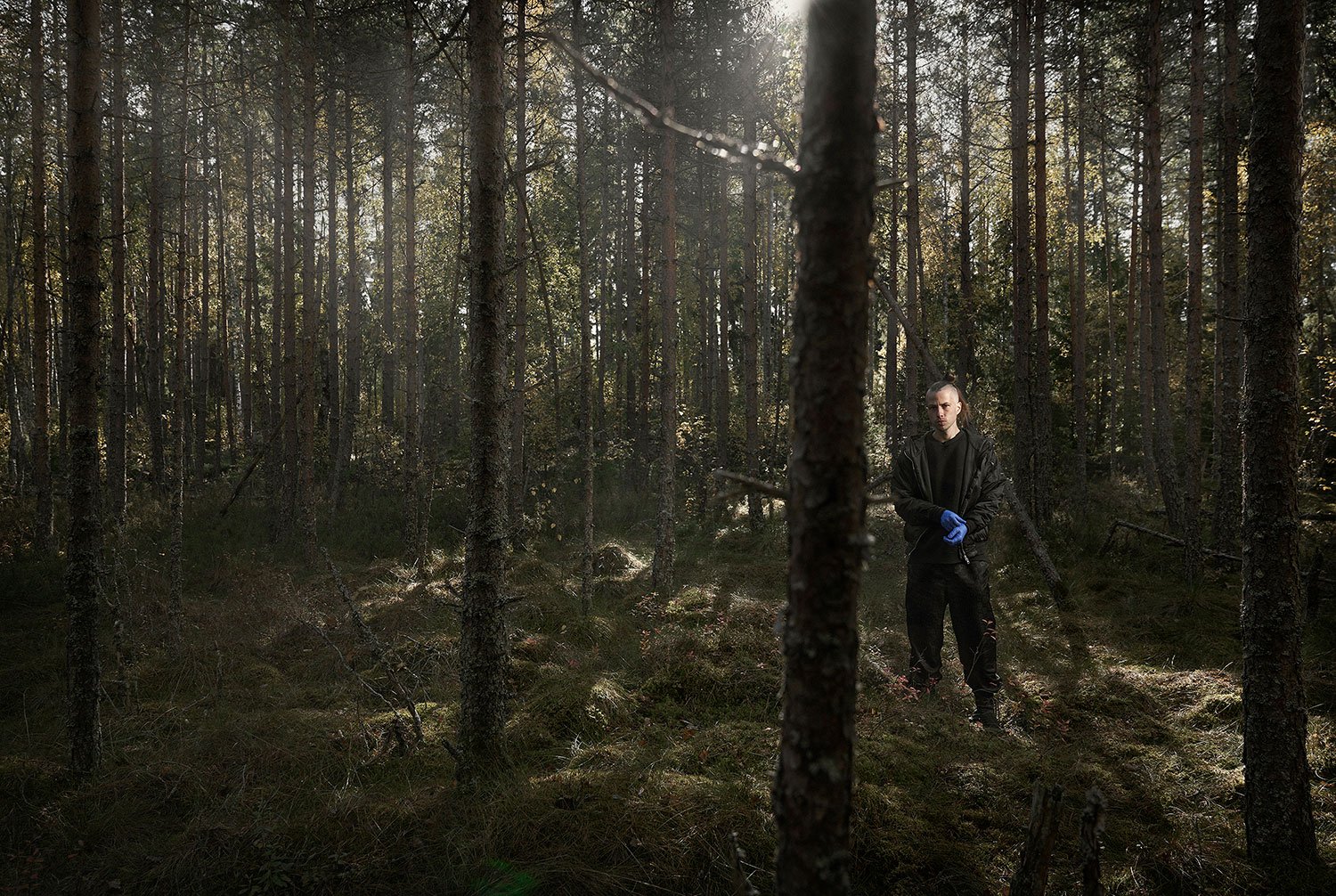
Portrait of Toni R Toivonen in middle of Finnish forest. Photo: Ken Hermann
You live and work in the middle of a Finnish forest. How much of your work actually comes from that place?
"A big part of It, I’m sure. I live in the world I work with. Animals, forests, seasons, decay, growth."
"Nature (Morte) is not a subject I go out and find. It is my everyday life."
When you chase the dead, they end up chasing you.
Toni R. Toivonen
You also work with monotypes that begins with historical depictions of carcasses. But they ends up somewhere completely different.
"Yes. I started by studying depictions of carcasses throughout art history. But soon the carcasses got animated, some odd creatures appeared on the background and the images began to mix with my own life and motifs."
"I think that is how art works. You search for something – and suddenly the thing you are searching for starts searching for you."
“When you chase the dead, they end up chasing you.”
That might be a very precise description of your entire practice.
Now you are returning to Copenhagen, and at the same time you are publishing your first major book. It brings together around 12 years of work. What does it mean to stop and look back?
"It is actually quite strange. Normally, my mind is in the next work."
"The book forced me to look back. At people, places and works from the past. It isn't just a catalogue. To me, it is almost a self-portrait from cover to cover."
"All the texts in it are in conversation format with four interesting artsy people. And one of them is you. It feels right that it is being launched in Copenhagen."
And next comes Vienna, where you are scheduled to present a major solo exhibition at the Kunsthistorisches Museum in 2027.
"It is a big thing, a dream project. But the process is the same."
"I still work every day. I draw, I walk in the forest, I find materials. I follow the processes, which still speaks to me."
"The most important thing is the same as when we first met: to create, to breathe the process. Because in the end, it is not all about where the work ends up."
"It is about the impression it leaves behind."
About Toni R. Toivonen
Toni R. Toivonen was born in 1987 and graduated from the Academy of Fine Arts in Helsinki, where he completed his MFA in 2016.
His work has been exhibited internationally in cities including Frankfurt, London, New York, Kraków, Stockholm and Copenhagen. His works are held in a number of public collections, including Kiasma Museum of Contemporary Art, Sara Hildén Art Museum, MOCAK – Museum of Contemporary Art in Kraków, Vantaa Art Museum, Saastamoinen Foundation and Wihuri Foundation.