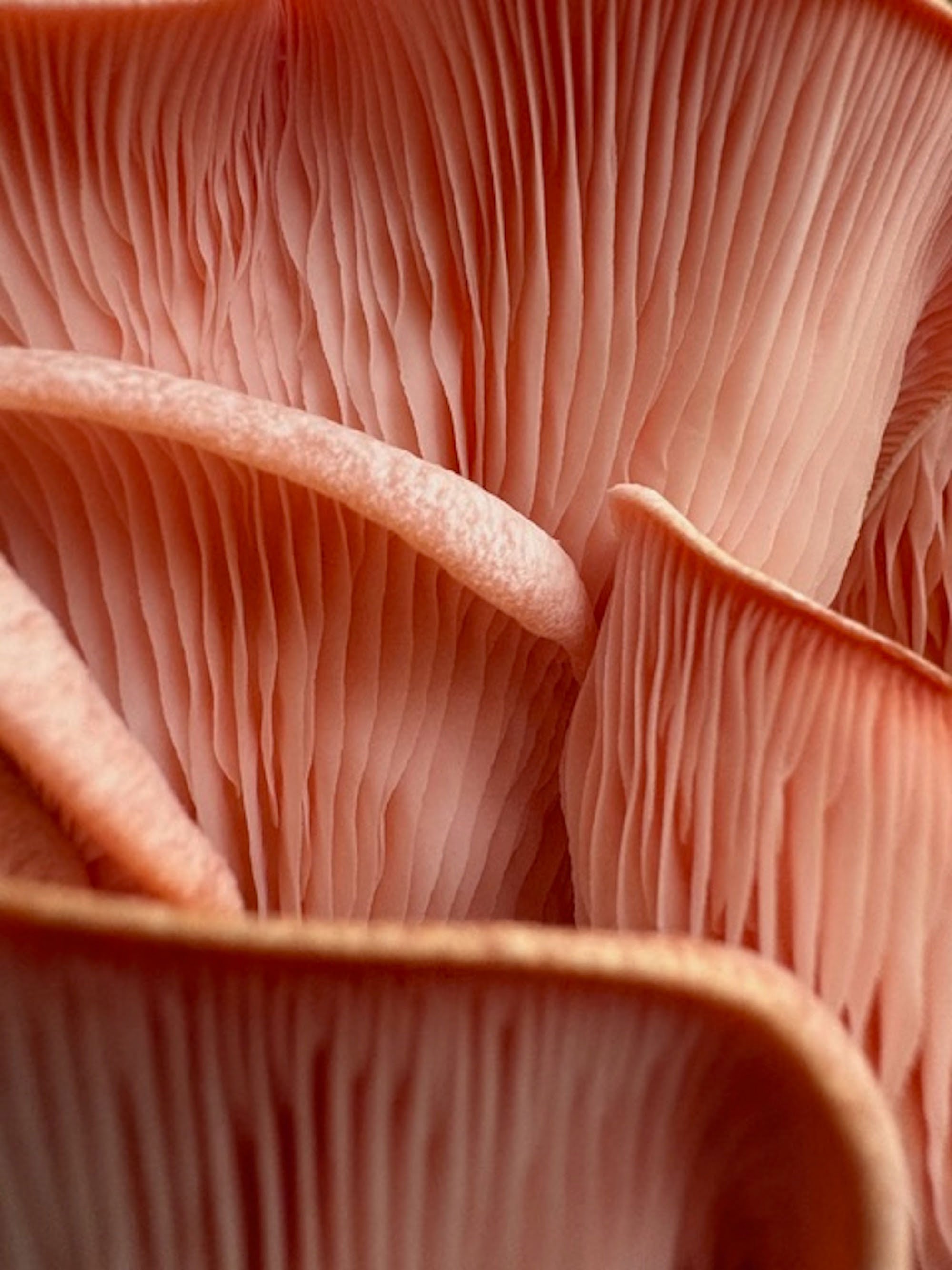
Værkerne i Flora, Fauna & Fungi undersøger symbiosen mellem planter, dyr og svampe. Projektet er en taktil undersøgelse af relationerne mellem levende systemer med fokus på de komplekse indbyrdes afhængigheder, der opretholder liv.
I rummet hænger rå silketekstiler, som er farvet med en række naturlige farvestoffer udvundet af insekter, blomster, svampe og psykoaktive planter. De klare røde nuancer stammer fra cochenille, et parasitisk insekt, der lever på kaktusser i Central- og Sydamerika, mens de mørkere røde toner er udvundet af Mimosa hostilis, en tropisk plante, som også indeholder en meget potent psykedelisk forbindelse. Gule toner kommer fra Reseda luteola, grønne fra klorofylekstrakt og orange fra svampen Hypomyces lactifluorum.
Udstillingen omfatter også tryk lavet med vilde svampe indsamlet på Lolland, som indfanger frigivelsen af sporer, når de slynges ud i luften. Fotografier dokumenterer både lokalt fundne svampe i Danmark og eksemplarer dyrket i hjemmet.
Derudover undersøger værkerne, hvordan planter og kornarter kan transformeres gennem fermentering. Indsamlede grønne planter har gennemgået mælkesyregæring, og ris er blevet inokuleret med Aspergillus oryzae. Fermentering er en transformativ proces, der ændrer det oprindelige materiales karakter og åbner op for nye potentialer.
[ENG, original tekst]
The works in Flora, Fauna & Fungi examine the symbiosis between plants, animals, and fungi. The project is a tactile investigation into the relationships among living systems, focusing on the complex interdependencies that sustain life.
The works in Flora, Fauna & Fungi examine the symbiosis between plants, animals, and fungi. The project is a tactile investigation into the relationships among living systems, focusing on the complex interdependencies that sustain life.
Hanging in the space are raw silk textiles that have been coloured using a range of natural dyes derived from insects, flowers, mushrooms, and psychoactive plants. The brighter reds come from cochineal, a parasitic insect that lives on cacti in Central and South America, while the darker reds are derived from Mimosa hostilis, a tropical plant that also contains a highly potent psychedelic compound. Yellow tones come from Reseda luteola, greens from chlorophyll extract, and oranges from the mushroom Hypomyces lactifluorum.
The exhibition also includes prints made from wild mushrooms foraged on Lolland, capturing the release of spores as they are cast into the air. Photographs document both locally found mushrooms in Denmark and specimens cultivated at home.
Additionally, the works explore how plants and grains can be transformed through fermentation. Foraged greens have undergone lacto-fermentation, and rice has been inoculated with Aspergillus oryzae. Fermentation is a transformative process that alters the character of the original substance and unlocks new potential.
Kilde:
kiosk
kiosk