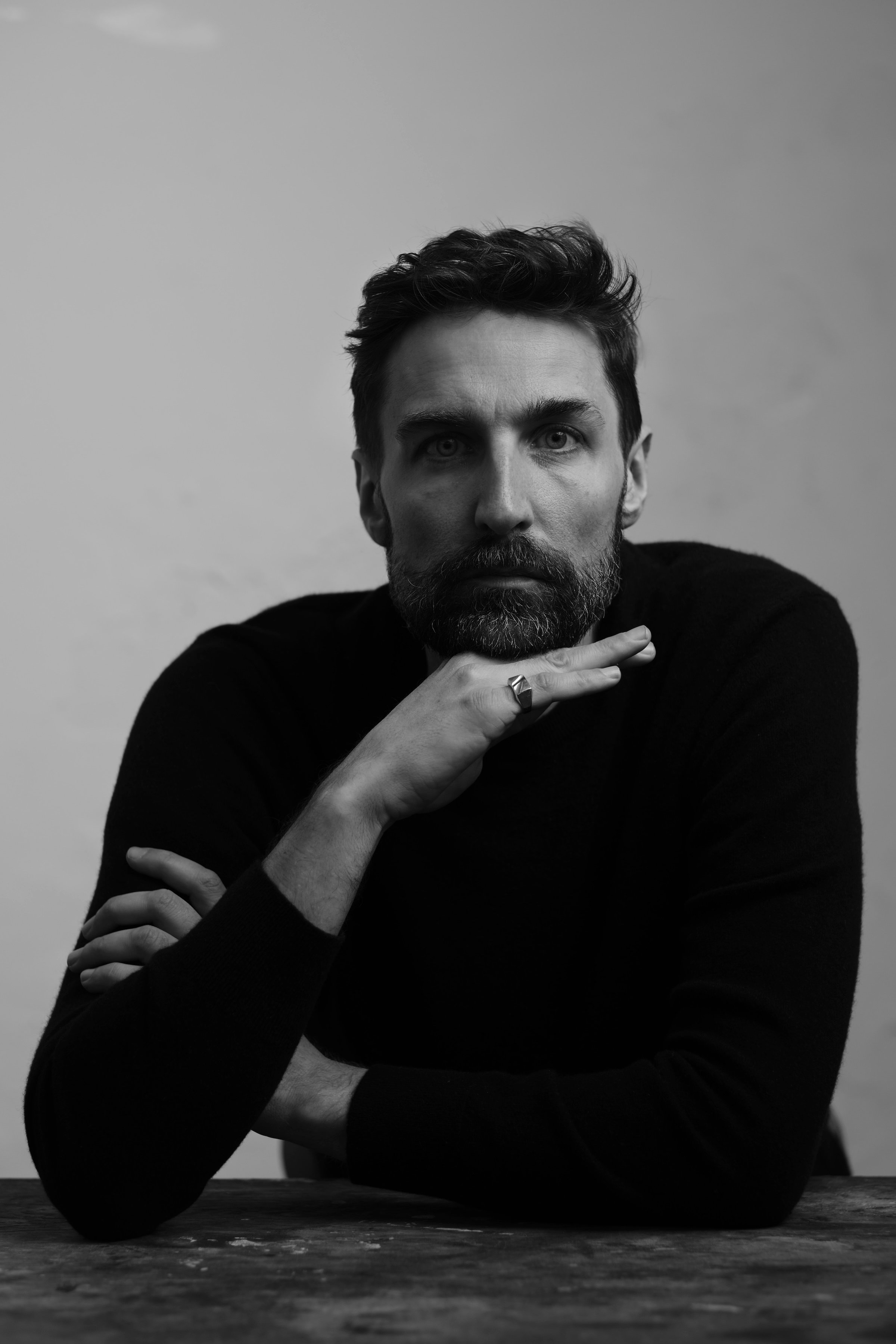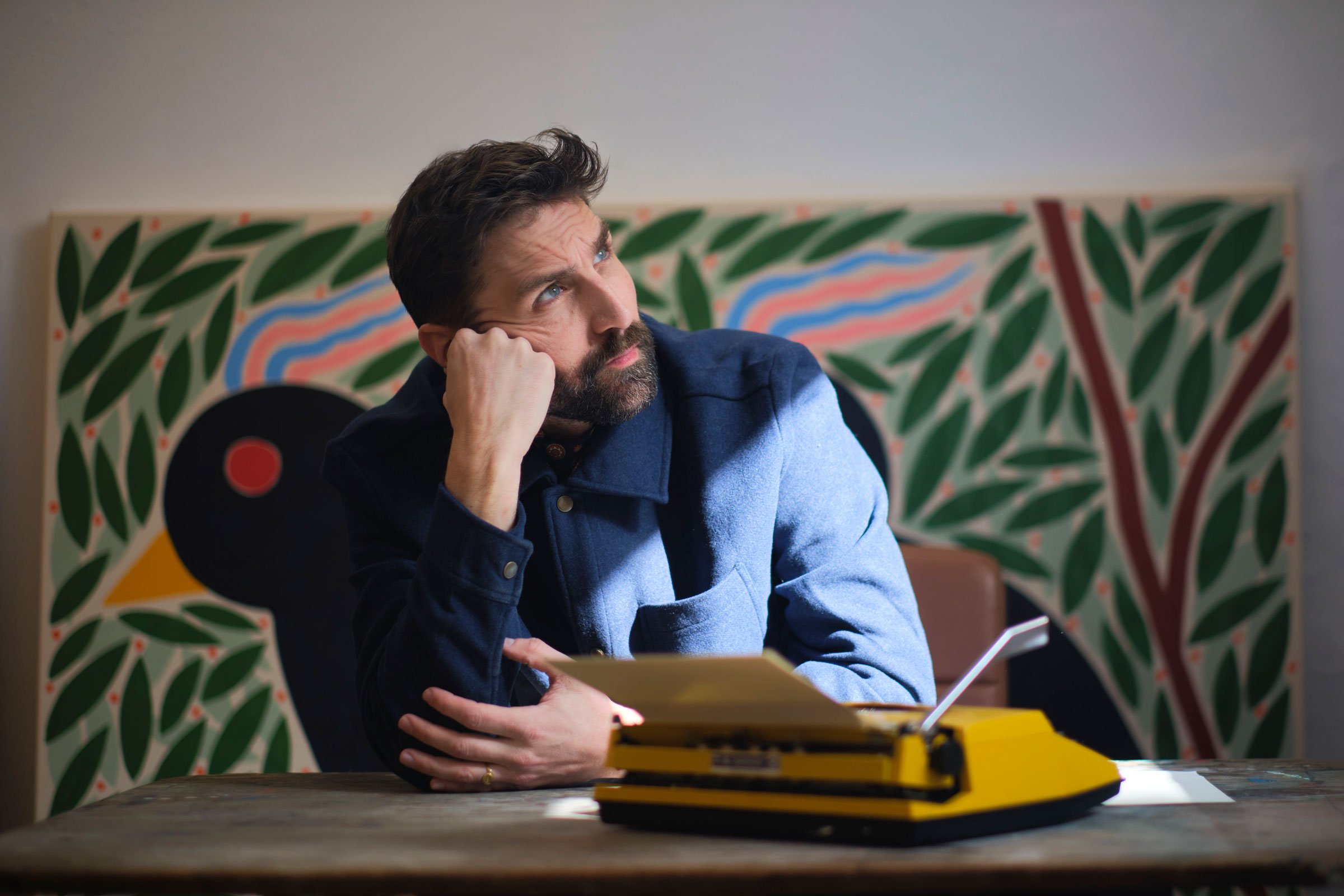
After spending a decade abroad, Anders SCRMN Meisner developed his artistic voice far from the Danish art scene. Today, he exhibits internationally across the United States, Asia and Europe with paintings that balance humour and fragility, pop culture references and personal narratives.
A pair of red flamenco shoes. A solitary red apple in a sea of blue. Two birds that cannot be separated. A lost pearl resting on a leaf.
Meisner’s paintings are filled with objects that appear deceptively simple at first glance, yet reveal new meanings the longer one spends with them. His motifs become entry points into stories, memories and associations that emerge in the encounter between artwork and viewer.
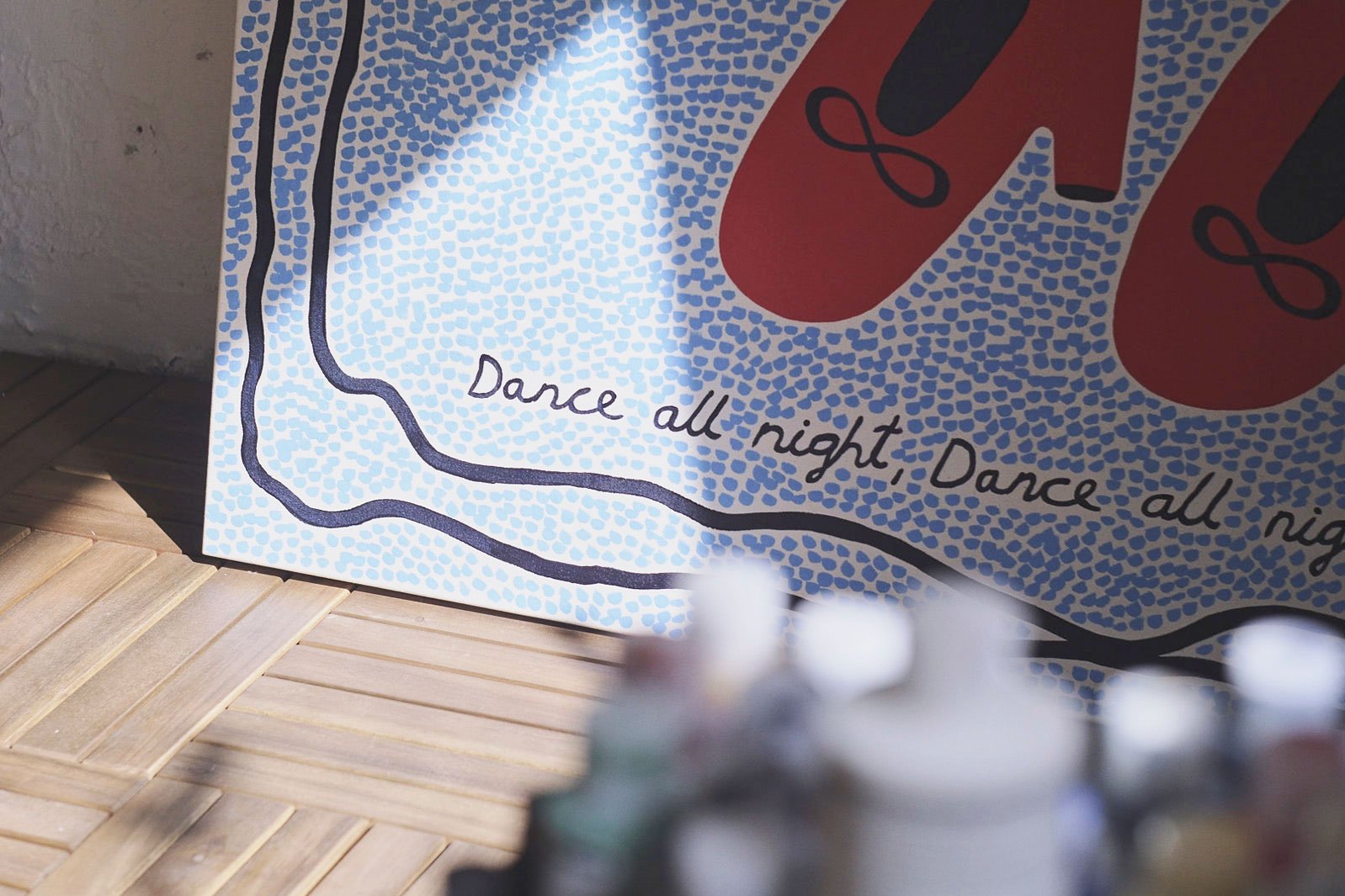
From Anders SCRMN Meisner's studio. Photo: Davy Denke
From June 12, the artist will present a new exhibition at Hans Alf Gallery, and in November he will open his second solo exhibition in New York. When I meet him in his studio, our conversation quickly moves away from individual works and towards what lies behind them.
An artistic practice shaped outside Denmark
There is something about Anders SCRMN Meisner’s paintings that feels less Nordic than much of the art one encounters on Danish walls. The colours are louder. More insistent.
I wasn’t really in contact with the Danish art world.
Anders SCRMN Meisner
Meisner points out that he spent his formative years outside Denmark.
At the age of twenty, he moved to Seville. Later, he relocated to Amsterdam. Altogether, he spent around ten years abroad while developing his artistic practice.
“I wasn’t really in contact with the Danish art world at all while I was finding my visual language and developing as an artist,” he explains.
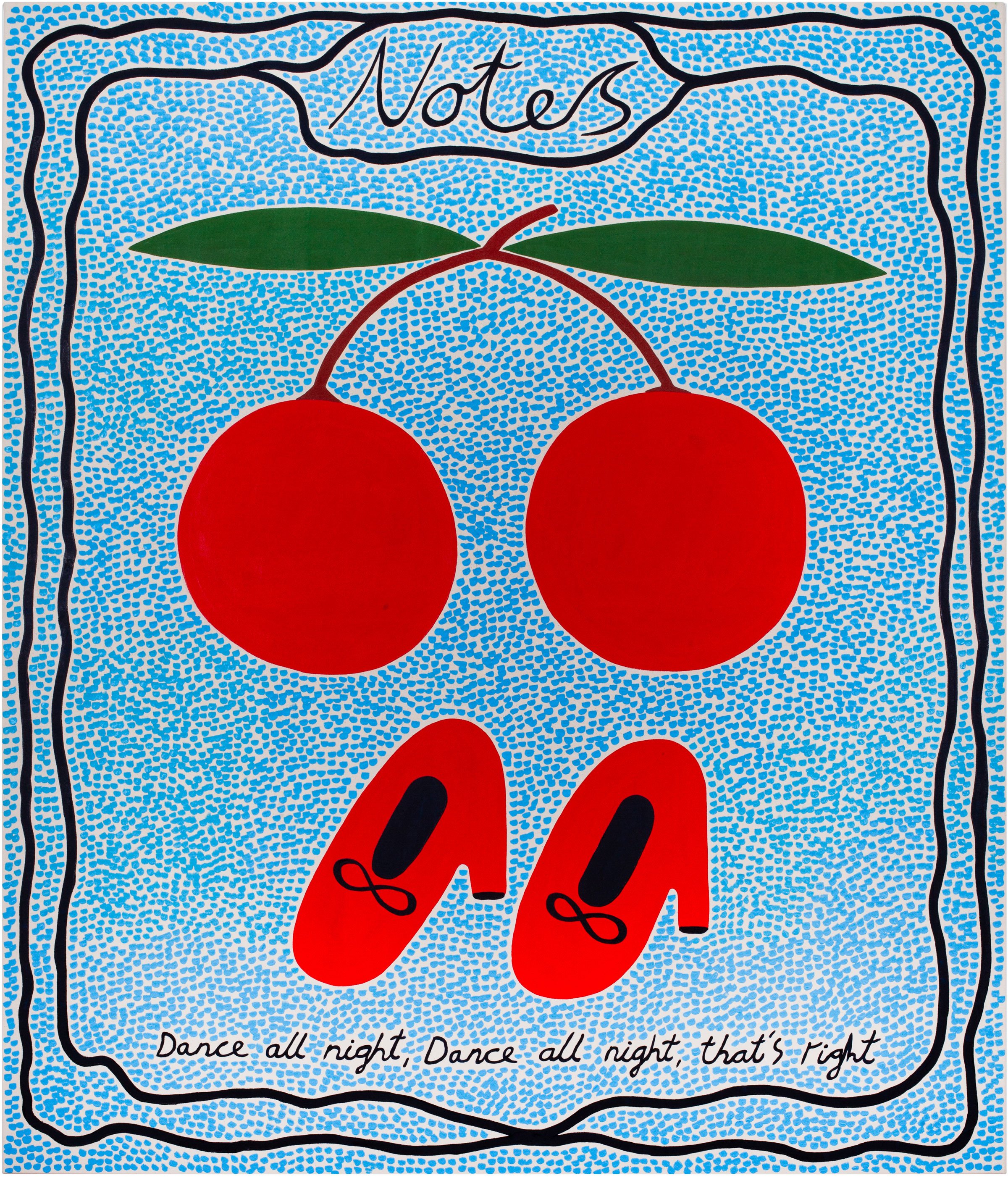
Anders SCRMN Meisner: Red Cherry Red Show,2026. © Anders Scrmn Meisner
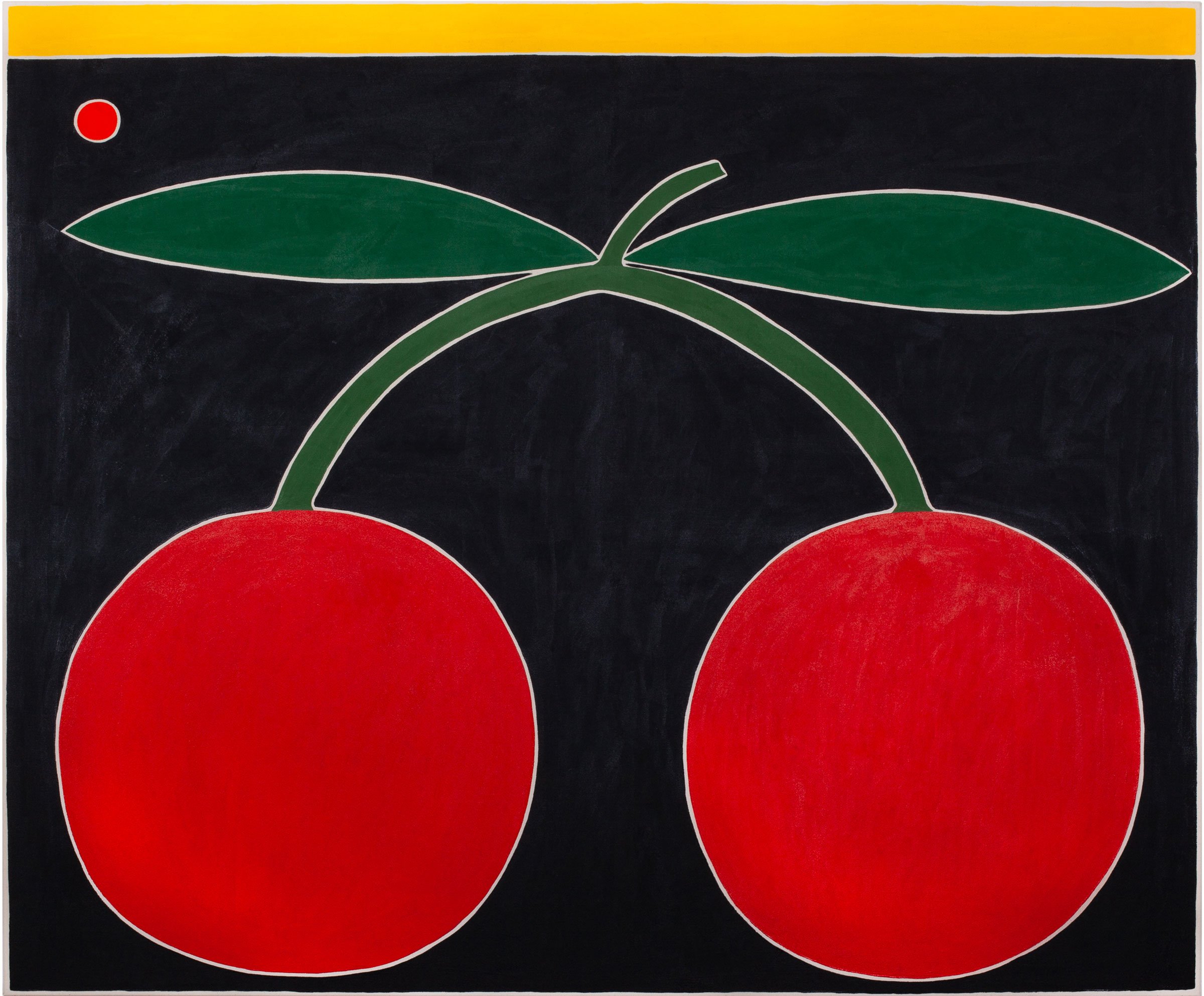
Anders SCRMN Meisner: Very Pretty And Delicious,2026. © Anders Scrmn Meisner
Perhaps this is also why his use of colour is often perceived as something other than distinctly Danish. “A lot of people see a South American influence in my work.”
When we talk about how the colours can seem almost bold in a Danish context, he turns the perspective around:
“It’s funny, because if you’re in Latin America or Spain, there are simply many more colours.”
When paintings need to share the same room
Colour has become one of Meisner’s most recognisable characteristics. Yet although the works are often experienced as explosive, he explains that he actually exercises restraint.
Not for the audience’s sake, but for the paintings’.
“I’ve tried to be more restrained with this exhibition. I’ve held back a little. For me, it could become much more extreme.”
The explanation lies in how the works behave when shown together.
“If I’m making an exhibition, I simply can’t turn the volume up to maximum in every painting. They start competing for attention. There needs to be a balance so they can speak to one another.”
He speaks about the works almost as if they were people—entities that need to share space and enter into relationships.
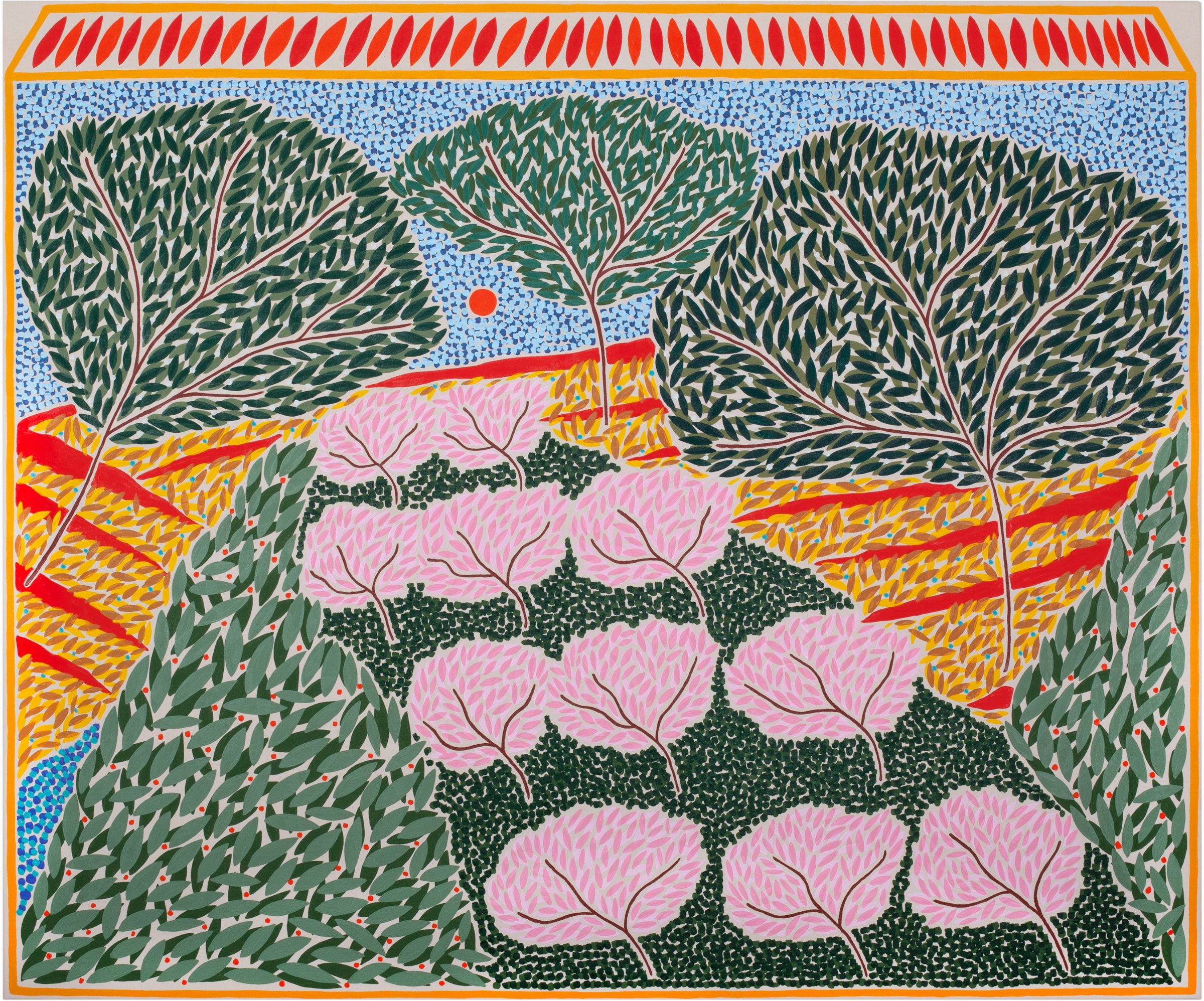
Anders SCRMN Meisner: I Dream Of Japanese Cherry Trees, 2026. © Anders Scrmn Meisner
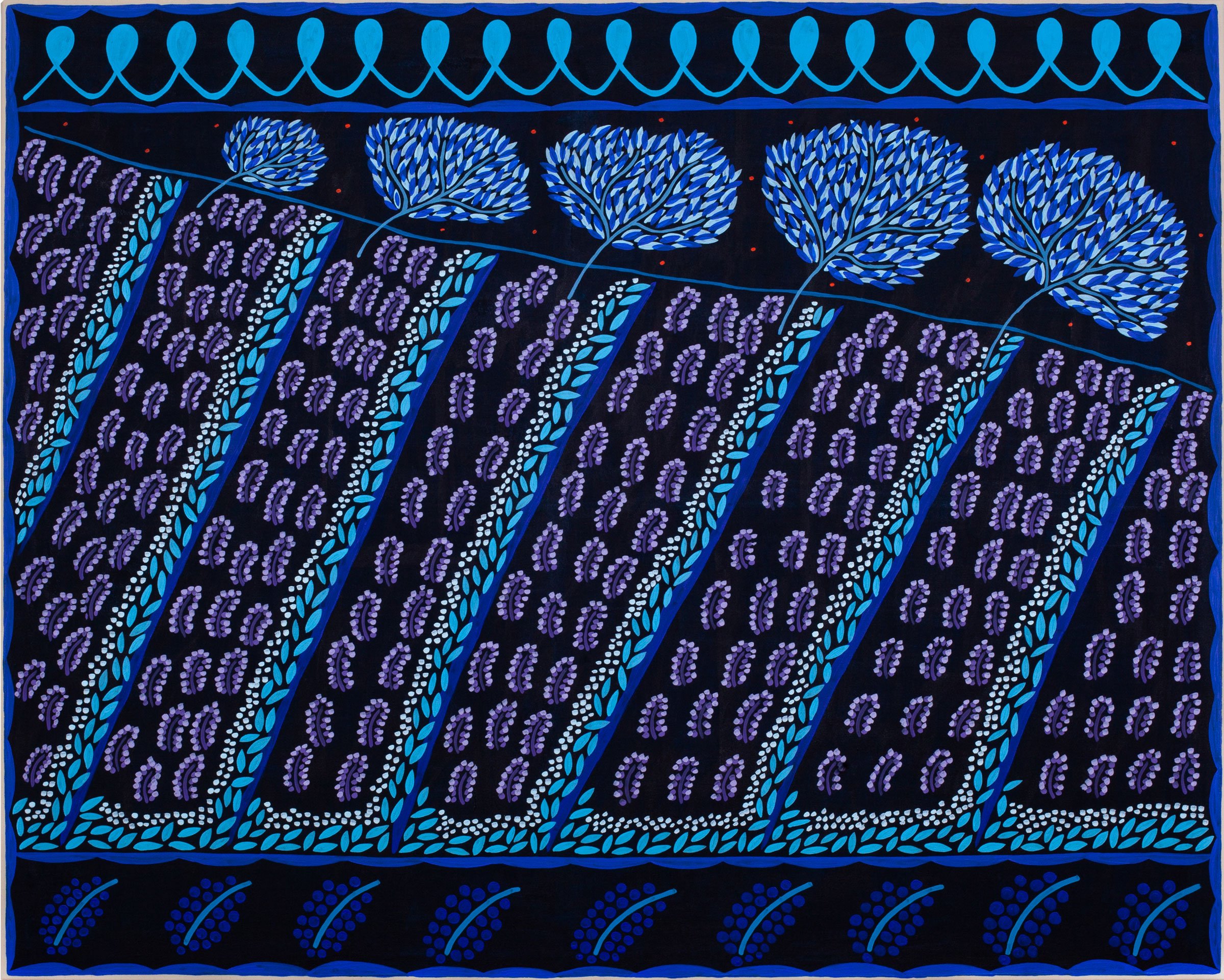
Anders SCRMN Meisner: Why Do You Like Pinot So Much, 2026. © Anders Scrmn Meisner
The afterlife of Punk
Before painting became his primary focus, Anders SCRMN Meisner played music in punk and rock scenes around Amsterdam, the Benelux countries and England.
It was a DIY culture.
“You printed your own posters and your own T-shirts. You did everything yourself.” That experience continues to shape him.
“If you can play music and keep something like that going for years, it’s almost as good as a business degree, because you have to learn every aspect of it.”
He describes life as an artist as surprisingly similar to being in a band. Websites need to be built. Shipping needs to be organised. Social media needs attention.
The music itself, however, he does not miss.
“I realised that constantly touring and spending so much time driving around in a van just wasn’t for me.”
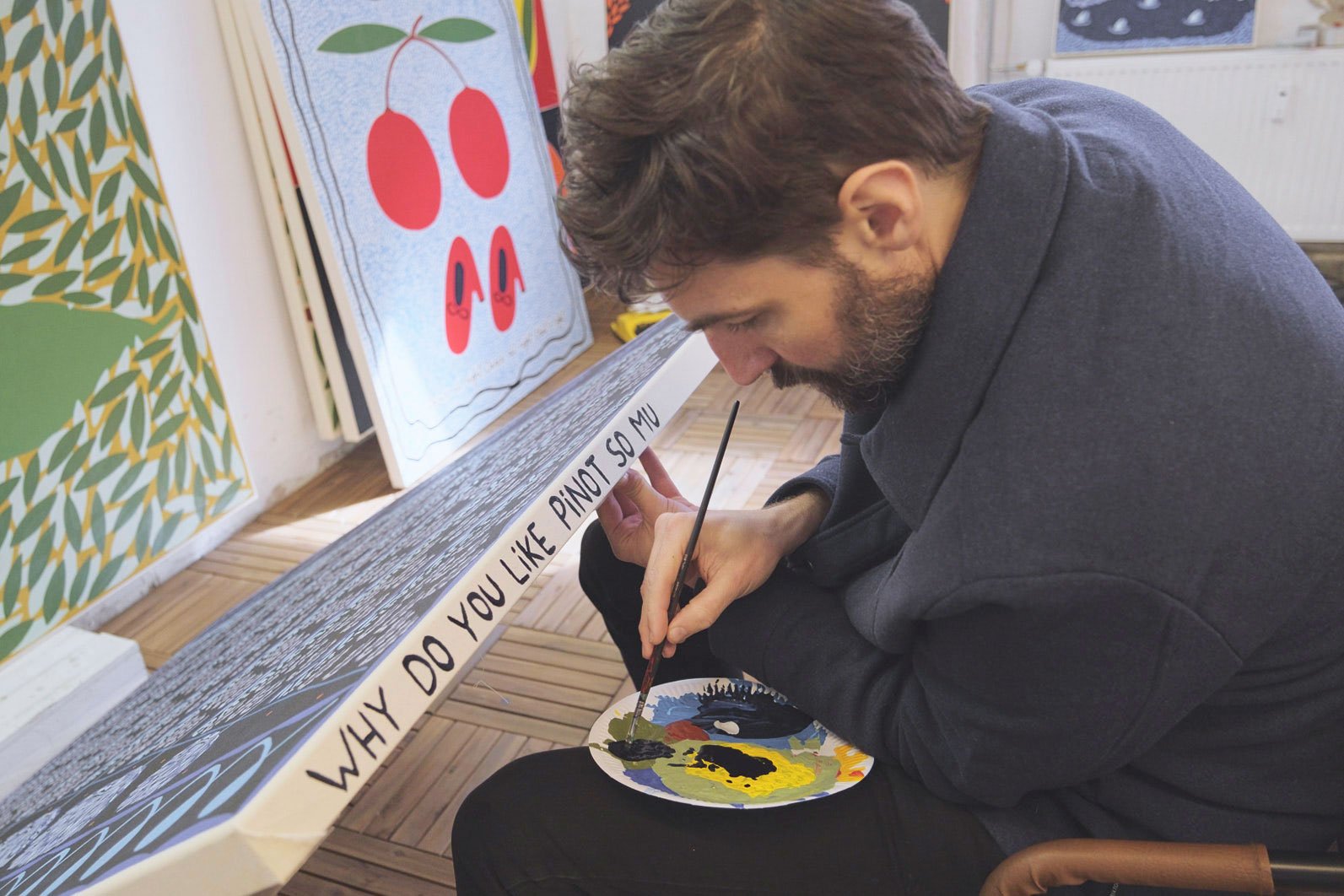
Anders SCRMN Meisner at his studio. Photo: Davy Denke
Restlessness as a driving force
When the conversation turns to work, he becomes more reflective.
Although the past few years have brought solo exhibitions in New York, Los Angeles, London and Berlin, success is not what he talks about most.
I have to admit that I'm probably a bit of a workaholic.
Anders SCRMN Meisner
Is it restlessness?
“One hundred percent. Very restless. Very impatient. And I have to admit that I'm probably a bit of a workaholic.”
He laughs.
“It’s very difficult for me not to work. I think about it all the time. In every situation. I’ll be cooking and suddenly I’ll get an idea for a painting and need to write something down, while standing there thinking about it and burning whatever I’m cooking.”
“There’s always a queue of paintings waiting to be made.”
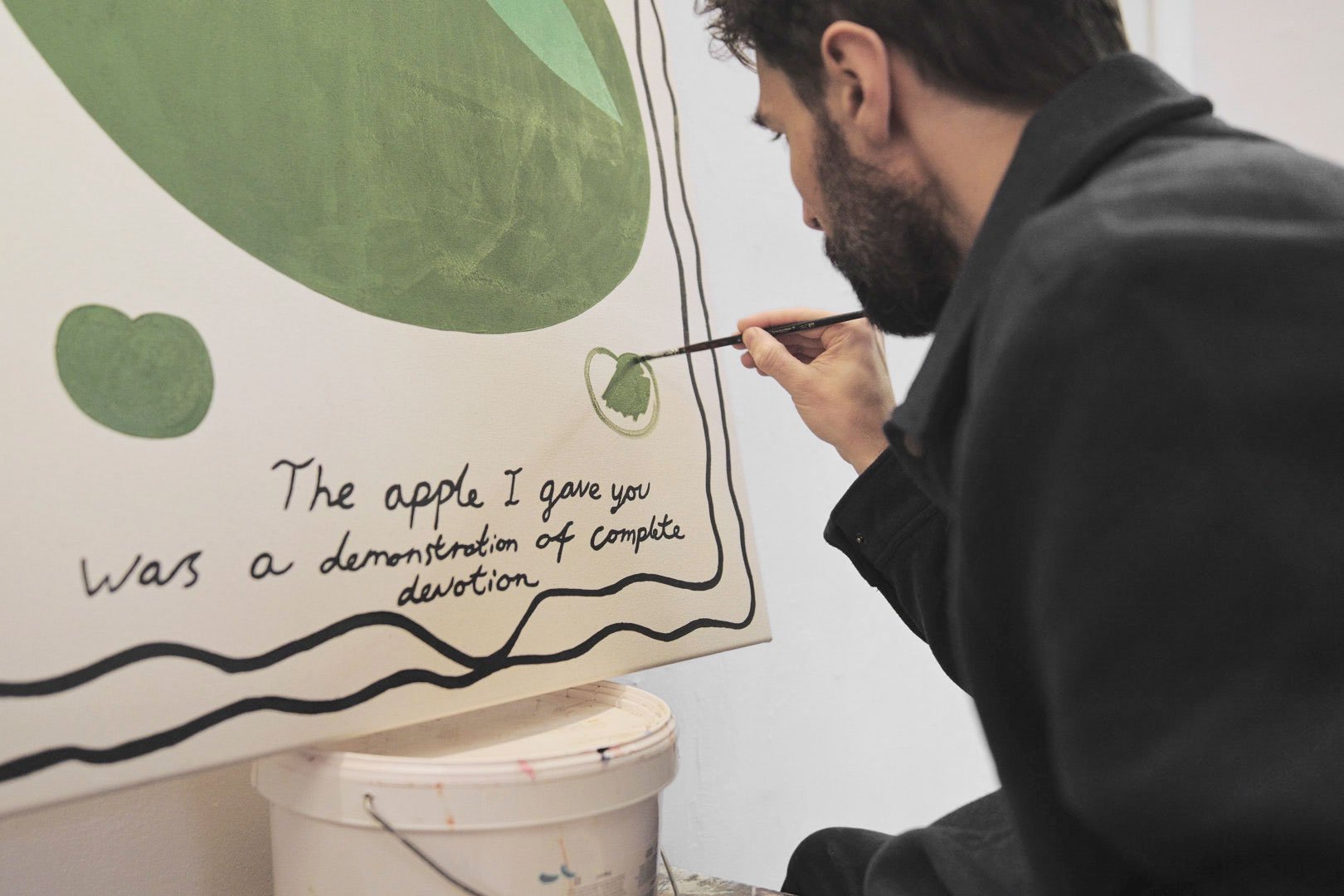
Anders SCRMN Meisner at his studio. Photo: Davy Denke
How do you paint love?
Looking back across his exhibitions, certain themes emerge again and again.
Landscapes. Spirituality. Desire. Love.
At one point he worked on an exhibition centred on love and desire.
Did you figure out what love and desire are through painting?
“I figured out what I needed to paint, at least.”
How do you investigate something like that in an image?
“If I paint a large picture of a double bed with a single person lying in it, the viewer immediately starts wondering where the other person is. Are they at work? Was there a breakup? Or does the other person not exist at all?”
He leans forward.
“Those are the kinds of images I like—images that invite associations,” he explains.
The same applies to the red flamenco shoes that appear in the new exhibition. For the artist, they are connected to his wife and daughter, both of whom dance flamenco. For others, they evoke entirely different memories.
And that is precisely the point.
It’s increasingly my own inner world that generates the ideas for the paintings.
Anders SCRMN Meisner
From cultural history to the personal
Looking back over the past decade, he can clearly see a shift in his work.
“In the beginning, my paintings were more driven by historical events or cultural history,” he explains.
“Now it’s increasingly my own inner world that generates the ideas for the paintings. Instead of something coming from the outside, I think it’s coming much more from within.”
That does not mean the references have disappeared.
On the contrary, traces of film, literature and popular culture still appear throughout the paintings. But whereas they once served as starting points, today they have become part of more personal narratives.
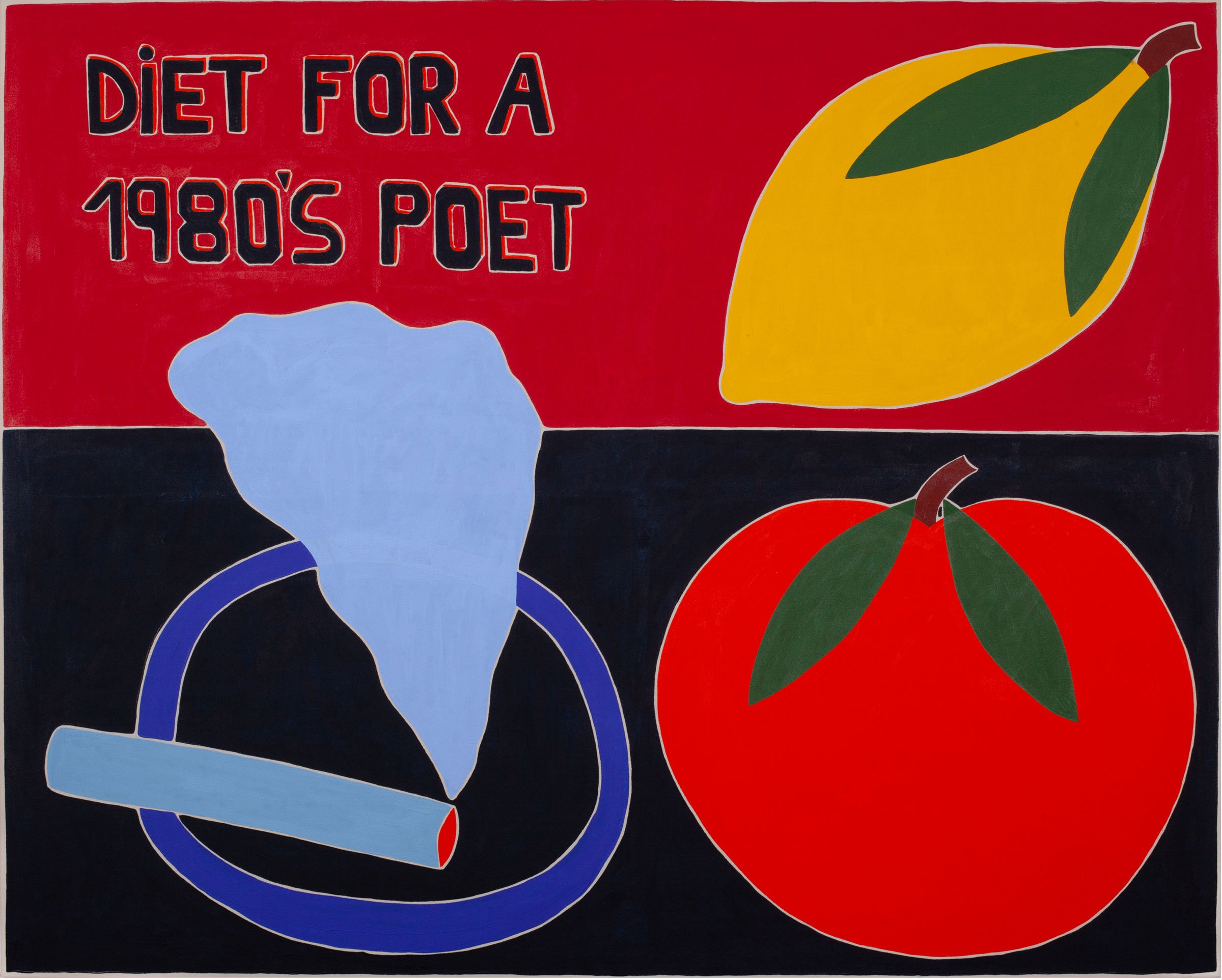
Anders SCRMN Meisner: Diet For A 1980s Poet, 2026. © Anders Scrmn Meisner
Images of fragility
One word returns several times during our conversation: fragility.
It is also a word Meisner himself uses to describe his current exhibition, Diet for a 1980s Poet.
The title comes from a painting featuring cigarettes and fruit—a humorous reference to the stereotype of the artist who survives on cigarettes, coffee and vitamin C.
But beneath the humour lies something more serious.
“I think it has something to do with that artificial stereotype involving cigarettes and alcohol,” he says, pointing to the distance between the myth of the artist and the reality, where most artists nowadays take care of their bodies in order to keep working.
I pretty much like all the things you’re not supposed to.
Anders SCRMN Meisner
Yet the fascination remains.
“I pretty much like all the things you’re not supposed to. Everything that shouldn’t be part of a diet,” he says, adding: “Instead of smoking a pipe, I paint them.”
The colourful paintings often contain something fragile. Something balanced between desire and limitation.
“There’s that fragility underneath it all. At the end of the day, those things come at a cost.”
Perhaps that is also one way of reading his paintings: as attempts to hold on to what we can never entirely keep.