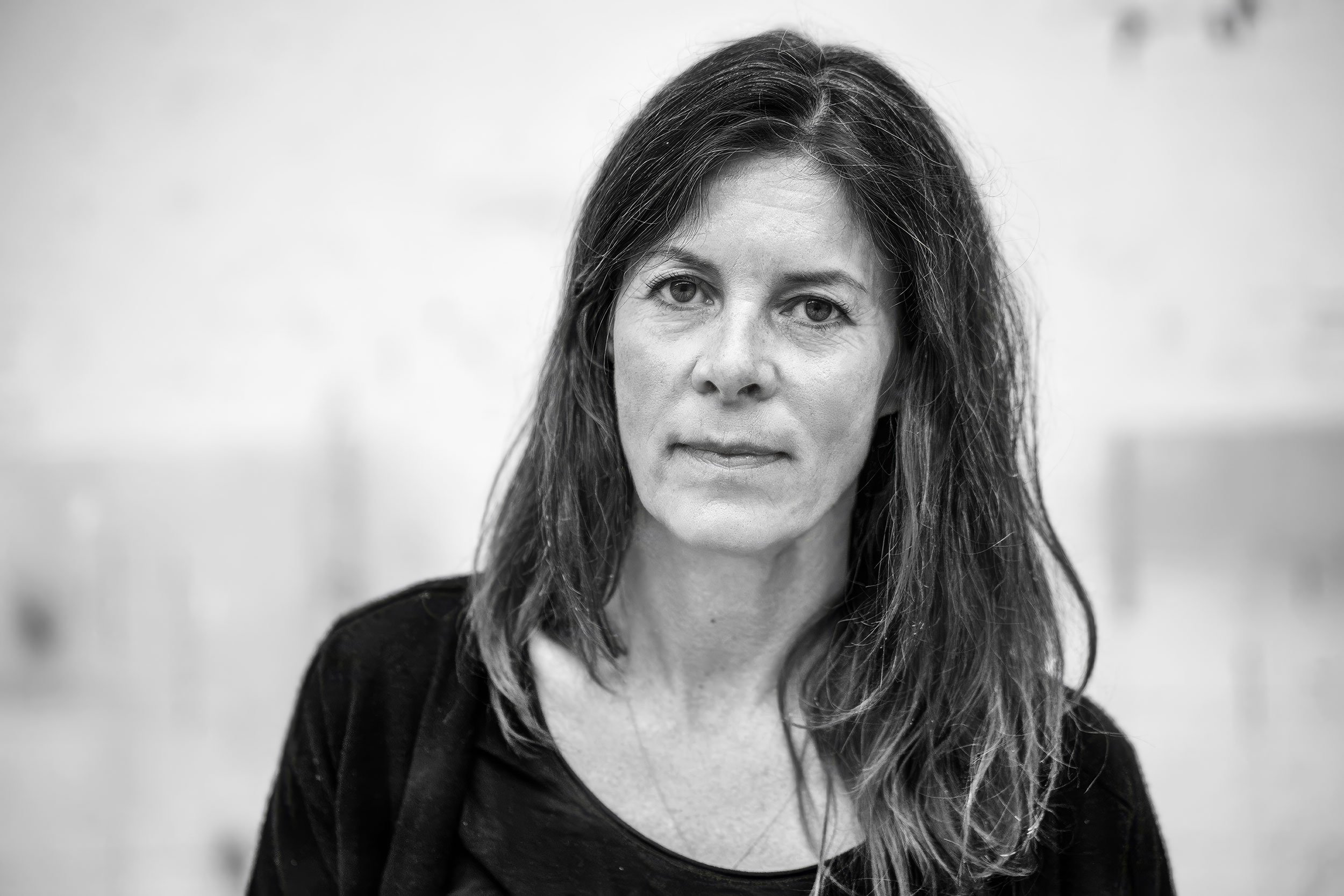
For three decades, Tina Maria Nielsen has explored how familiar objects can be transformed into sculptures that revolve around time, absence, and memory. At the underground gallery Boiler, the exhibition Descent into Your Solitude offers insight into the artist’s materially driven practice and the inner imaginative spaces her works set in motion.
What happens when an object loses its original function and becomes something else? In Tina Maria Nielsen’s sculptural practice, familiar everyday forms become the starting point for investigations into what cannot easily be grasped: absence, silence, and the traces of human presence.
Through casts and alterations of tangible objects, Nielsen shifts the meaning of things. The materials detach themselves from their original context and become carriers of time, space, and memory. The tangible meets the imagined, and the sculptures evoke associations that extend beyond what we see at first glance.
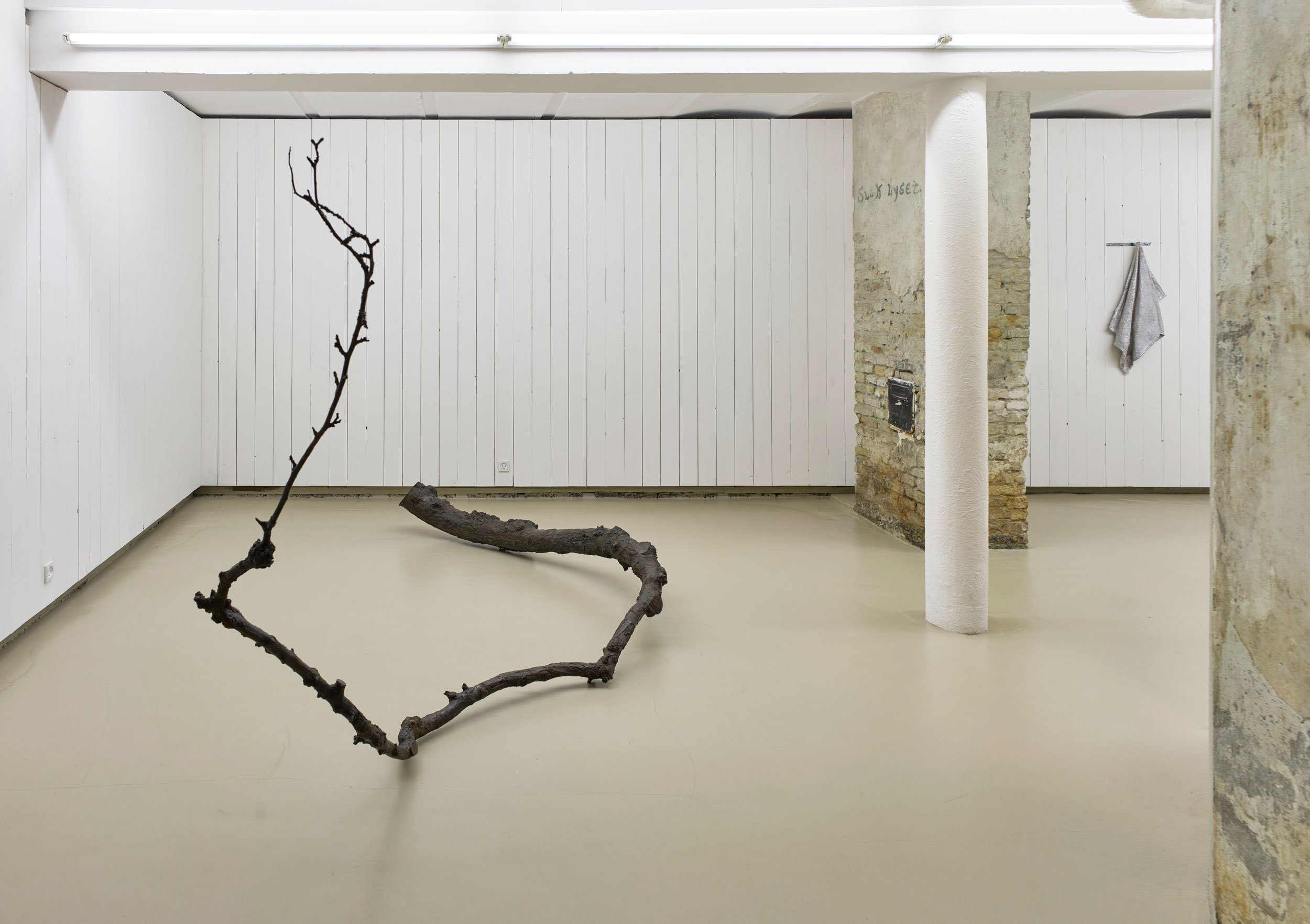
Tina Maria Nielsen: Descent into Your Solitude, installation view at Boiler. Photo: Anders Sune Berg
The works do not invite definitive interpretations, but rather a sensory exploration of how we experience objects and attribute meaning to them. In encountering the sculptures, our gaze shifts from the object itself to the images, memories, and experiences it awakens within us.
About
Tina Maria Nielsen (b. 1964 in Odense, Denmark) graduated from the Royal Danish Academy of Fine Arts in Copenhagen. Her work has been exhibited both nationally and internationally.
She was a co-founder of the artist-run exhibition space Skulpturi, which received the Danish Art Critics’ Award in 2012.
Tina Maria Nielsen has received several awards from the Danish Arts Foundation and was honoured with the prestigious Carl Nielsen and Anne Marie Carl-Nielsen Sculpture Award in 2018.
Three Decades of Working with Materials
At the gallery Boiler, the exhibition Descent into Your Solitude brings together three points of departure from Tina Maria Nielsen’s sculptural practice, spanning three decades. The exhibition traces a journey into the artist’s materially driven universe, where casts and transformations of familiar forms open up new ways of understanding the relationship between objects, people, and memory.
In connection with the exhibition, Johanne Schrøder of Boiler met with Tina Maria Nielsen for a conversation about time, traces, and three decades of artistic practice.
The exhibition brings together three works from different periods in your artistic career. Looking at the works together today, what connections do you see between them?
They are all quite sculptural: solitary, material, and clear in their visual language. In different ways, each demonstrates how I explore what a sculpture is—and what happens when the figurative image encounters the resistance of the material.
The material sometimes behaves differently from what I had anticipated.
Tina Maria Nielsen
Each of the three works in the exhibition is made using a different material. What role do materials play in your practice?
My practice is both conceptual and process-driven. The properties, meanings, presence, and sensory qualities of materials are not simply elements I work with; they are central to the process of coming to know and understand through my practice. This is where my thinking develops and deepens.
For example, I experiment a lot with, and push the limits of, direct burnout casting of objects. There is always an added element of risk involved, as the material sometimes behaves differently from what I had anticipated.
It is through learning to work with these often resistant or unruly material processes that sculpture becomes meaningful to me. This is where I experience, understand, and ultimately come to know something. It is a matter of ‘thinking with my hands’.
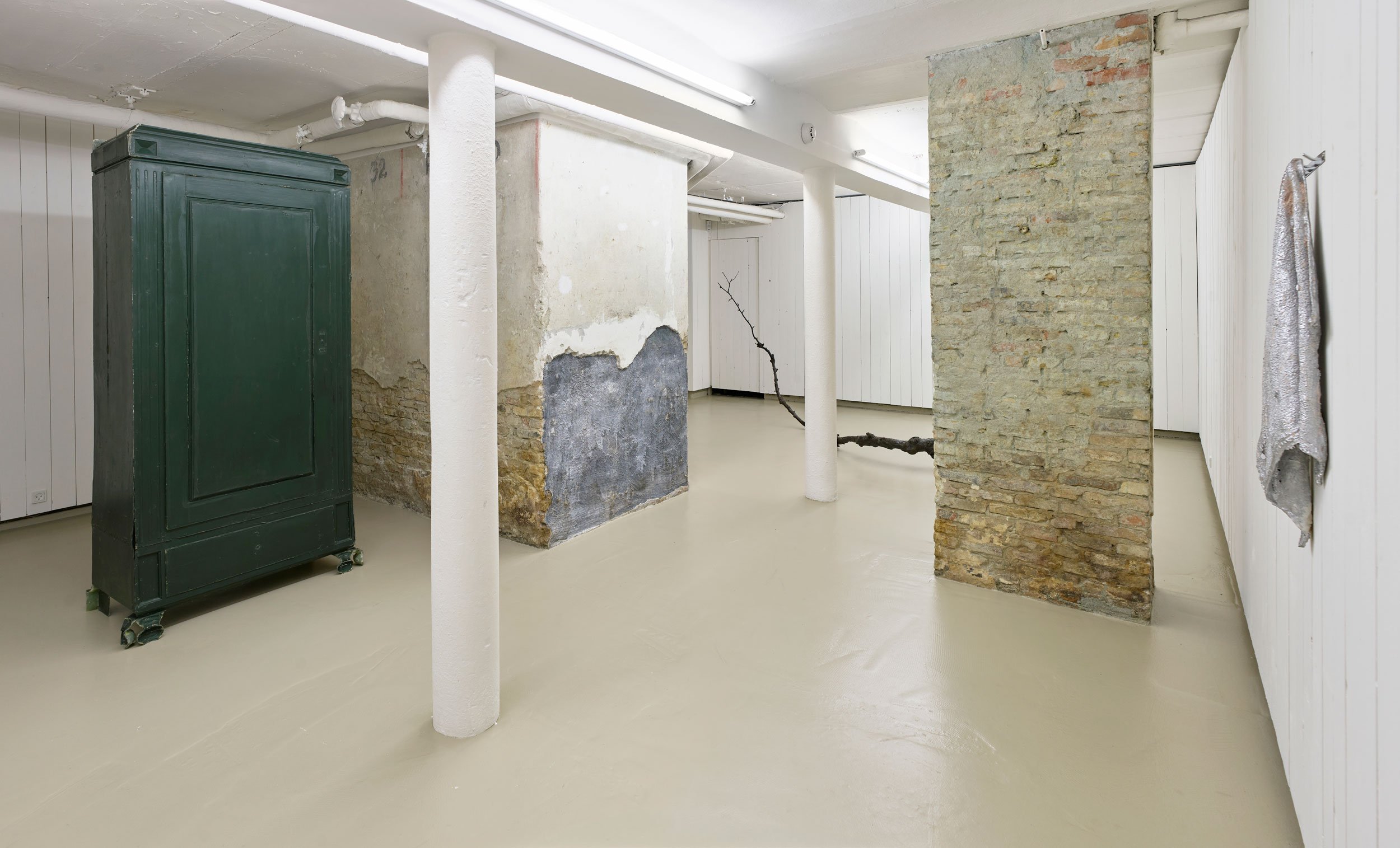
Tina Maria Nielsen: Descent into Your Solitude, installation view at Boiler. Photo: Anders Sune Berg
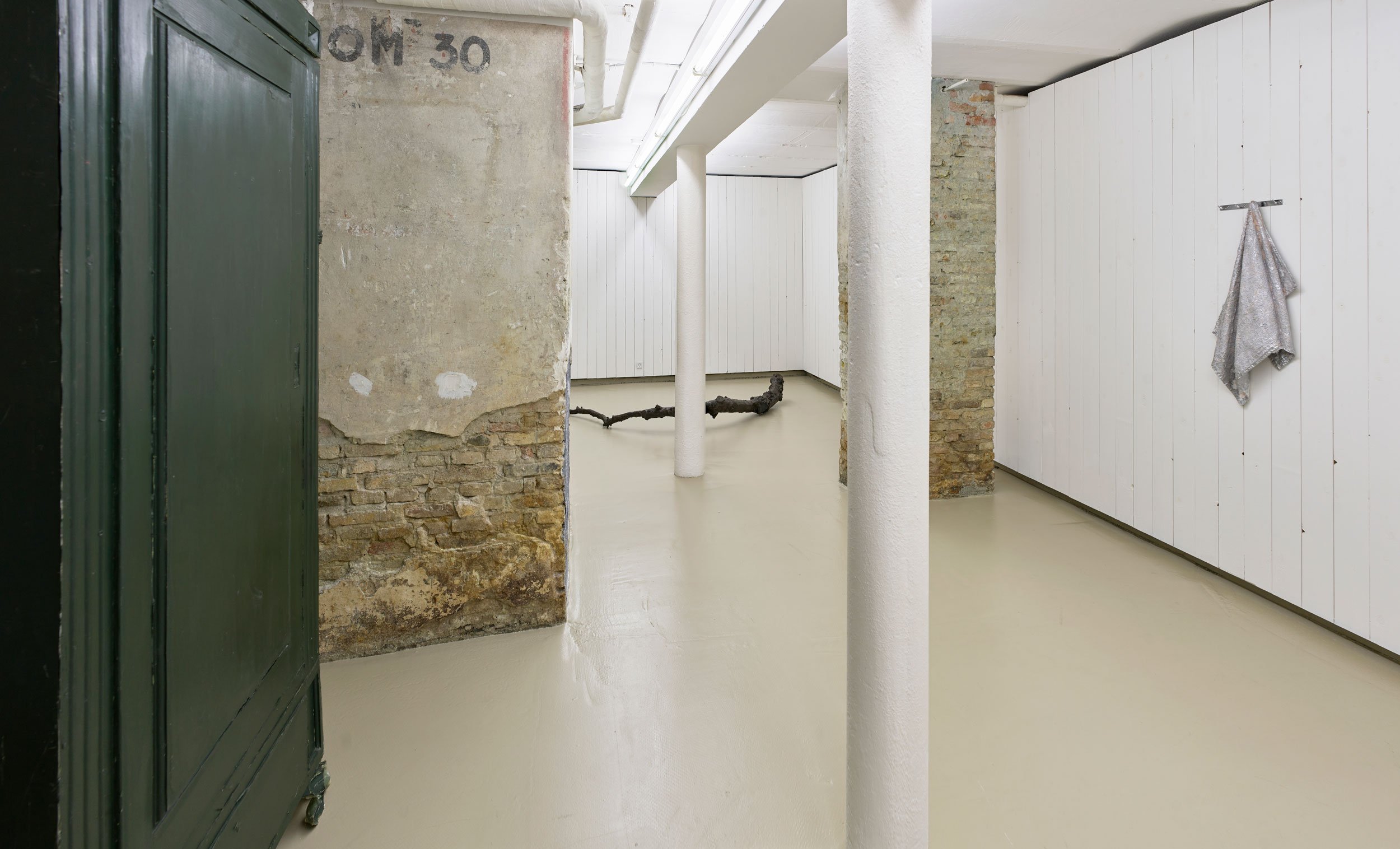
Tina Maria Nielsen: Descent into Your Solitude, installation view at Boiler. Photo: Anders Sune Berg
You often start with familiar everyday objects, which you then transform in different ways. Could you elaborate on this process? What happens to the way we perceive an object when it is removed from its original context?
The way I choose the objects varies. It might be a composition, an object, or a story. Sometimes I have to dig it up; other times, I stumble across it or pick the first thing that comes to hand. I don’t have any particular method for selecting them, and in that sense, perhaps the objects themselves don’t matter all that much. It’s only through the process of reworking them that they begin, so to speak, to speak in their own language.
I’m interested in how the familiar — the immediate image — seduces us. When I transform or rework it, I bring it forth anew, while simultaneously turning it into its ‘other’. Perhaps it is precisely through this displacement towards ‘the other’ that the image becomes accessible again.
The traces, and with them time, largely emerge on their own through the process of working the material.
Tina Maria Nielsen
In your work Line of Descent (2013), the life and history of the tree become visible through its growth rings, patterns, and pruning marks. How do you work with time and traces in your sculptures?
The traces, and with them time, largely emerge on their own through the process of working the material. Unlike many artists, who refine or perfect the surface, I often leave the marks of these interventions visible as part of the work’s expression.
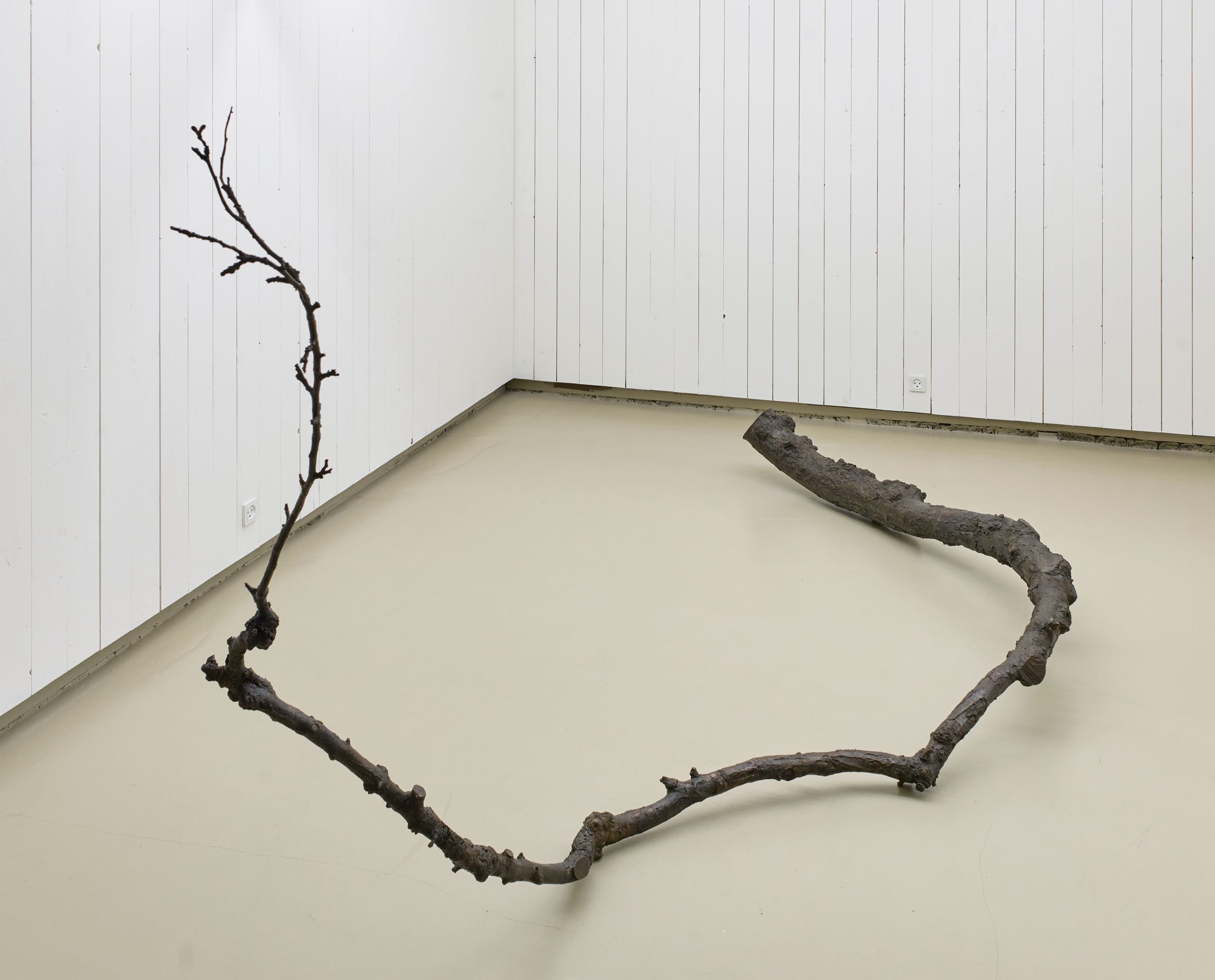
Tina Maria Nielsen: Line of Descent, 2013. Bronze 150x120x325 cm. Photo: Anders Sune Berg
Making the process of creation visible has become a central part of my aesthetic. It is something I can turn up or down, and it also serves as a kind of entry point into the sculpture: the viewer can see how the material has been worked. In this way, the distance between the sculpture and the viewer is reduced.
The moments from my childhood that I remember most vividly are closely tied to the atmosphere and mood of my surroundings.
Tina Maria Nielsen
The title of the exhibition, Descent into Your Solitude, takes its point of departure from Gaston Bachelard's The Poetics of Space. He describes how the places and spaces in which we have experienced solitude continue to exist within us because we wish to preserve them. Do you recognise this idea in your own work with space, objects, and memory?
I have never consciously thought of memory as a form of ‘deliberate preservation’. The moments from my childhood that I remember most vividly are closely tied to the atmosphere and mood of my surroundings. Emotional memory is closely connected to physical sensations, which both intensify and define the space.
When I work, the piece has to attain a certain precision, but knowing when it is finished is more a matter of intuition than of negotiating with the work—almost a physical sensation. In that sense, I can certainly see artistic practice as a form of revisiting: an attempt to approach the magical realm of memory through materialisation.
Over the years, of course, I have trained myself to pay closer attention to spaces and what they express. When you work in three dimensions while remaining so close to the recognisable, everyday world, the details of the exhibition space become more visible and more significant.
When I work on public commissions or site-specific works, the piece is always contextually connected to its location. But it is equally important to me, in terms of atmosphere, to remain aware of and humble towards what already exists. This is why many of my solo exhibitions have also become a kind of total installation, activating the history or architecture of the space.
The exhibition's title points towards an inner space of experience. What does solitude—or being alone and absorbed in your work—mean to the way you think and make art?
Being alone is absolutely essential to me. Being in the studio, alone with myself.
Tina Maria Nielsen
Being alone is absolutely essential to me. Being in the studio, alone with myself — only then can I sense whether something works, whether it holds true. Whether I can stand by my ideas depends on whether I can feel them in my body. For that, everything needs to become quiet.
I’m happy to share my ideas, and I rely a great deal on friends and colleagues to bounce ideas off. But I can’t call myself an artist unless I take sole responsibility for my work. After all, no one has asked me to do this. It is entirely my own choice.
Is there anything in your early work—for example, Aflukke (1997)—that you understand or see more clearly today?
I was pleasantly surprised to have the opportunity to show Aflukke again. I made it for the Charlottenborg Autumn Exhibition in 1997. It was one of three quite different works, and I had been invited to participate following my debut at the Spring Exhibition. At the time, I was very much concerned with getting everything in.
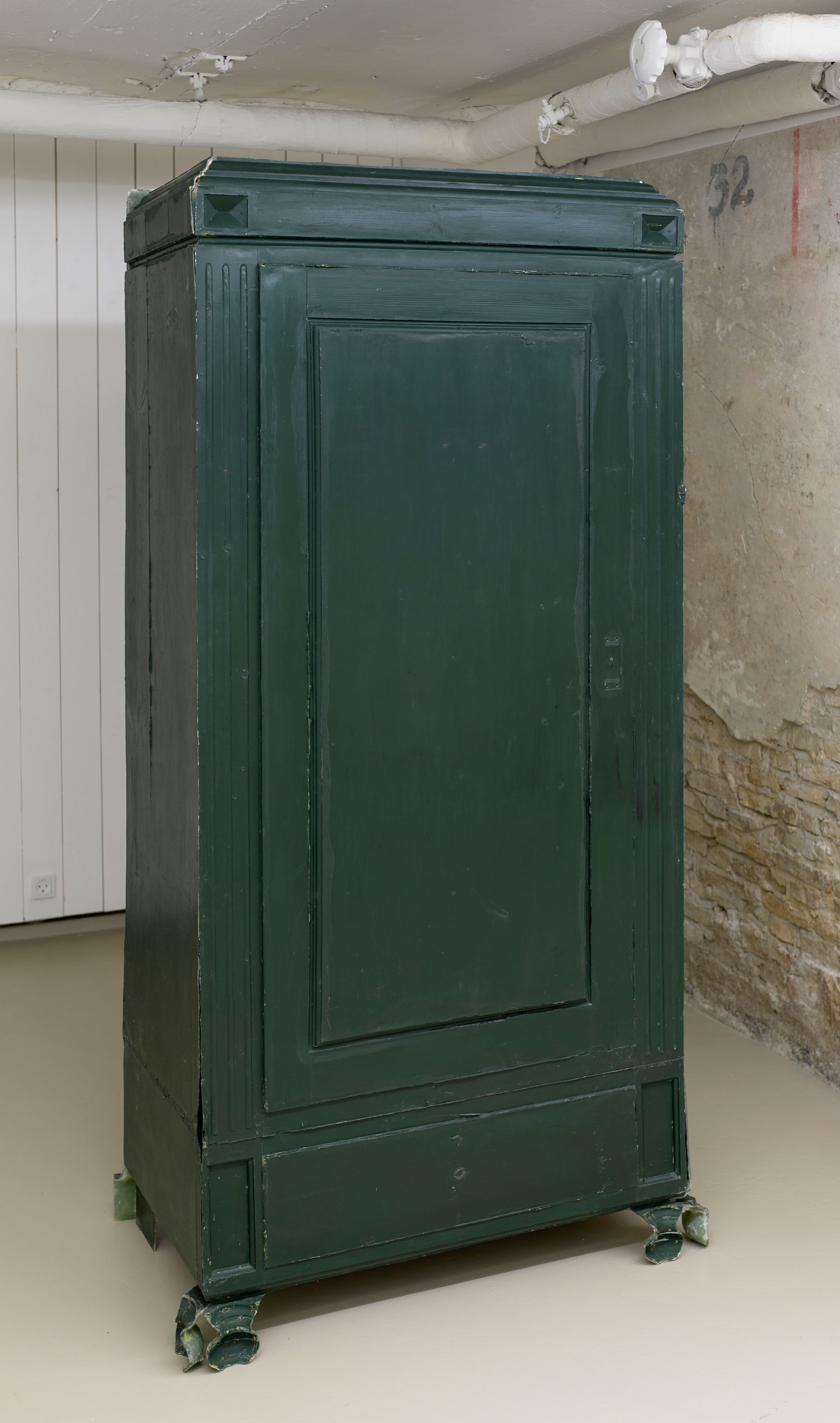
Tina Maria Nielsen: Aflukke, 1997. Polyester and Glass fibre
96 × 190 × 53 cm. Photo: Anders Sune Berg
The sculpture has been in my studio ever since, and now, almost thirty years later, it has emerged again. I feel that it holds its own just as clearly today as I had hoped it would back then. It embraces a kind of both-and, something I am pleased to encounter again. In a very simple, stripped-back way, it achieves a kind of correspondence between the immediate—the image—and the slow—the material.
But the years it has spent hidden away also make it more charged in a way. Something intentional comes into view differently, and more vulnerably, when a work re-emerges from storage.
Could you tell us a little about what set the new work in motion?
With the new work, I have aimed for the same directness or simplicity as in the other two sculptures. As in those works, a body is present in the sculpture—through its absence or its presence.
A reference to skin might be discernible in all three sculptures.
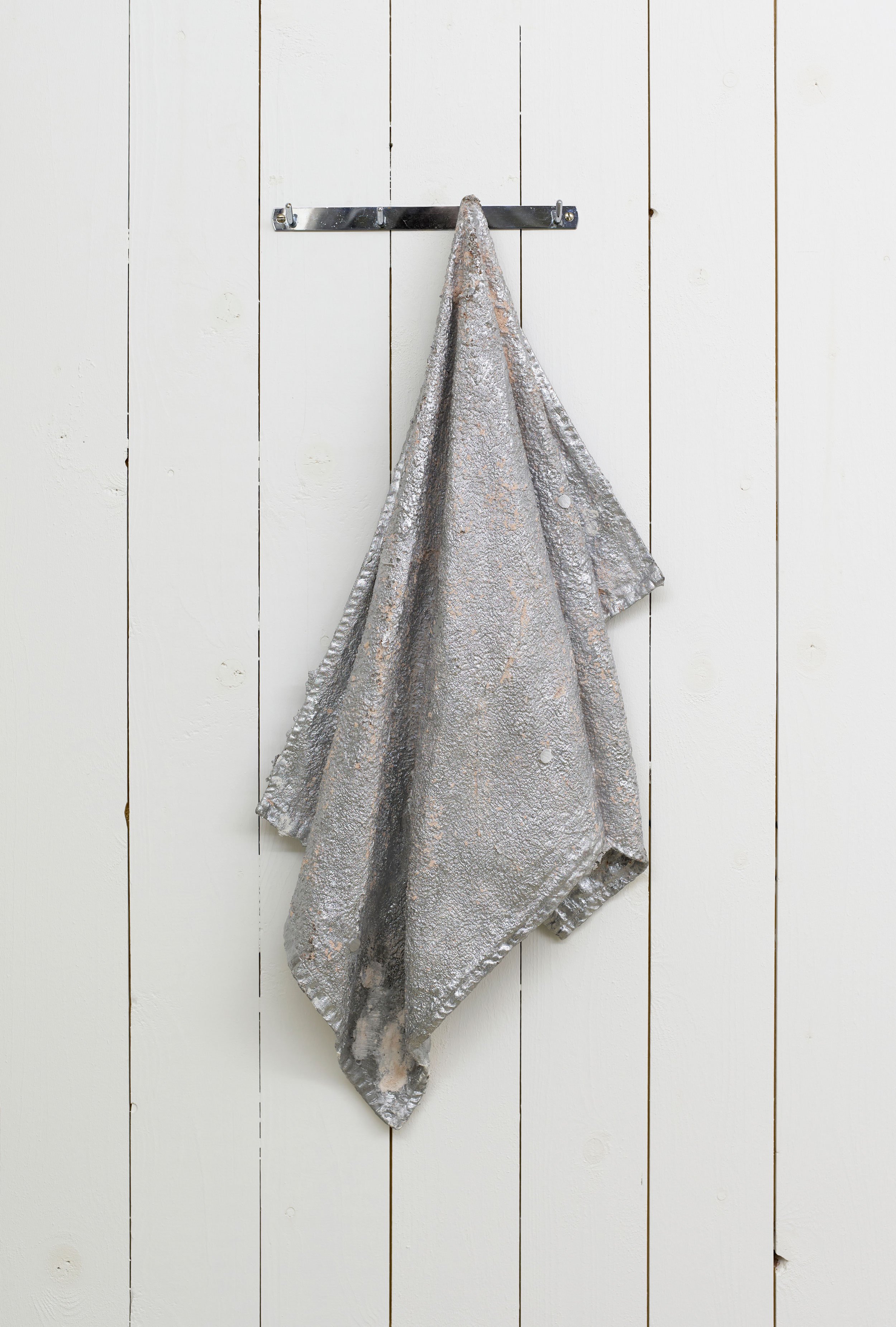
Tina Maria Nielsen: Hanging In, 2026. Aluminium and steel, 110 × 50 × 5 cm. Photo: Anders Sune Berg
I remain deeply fascinated by the sculptural body.
Tina Maria Nielsen
Looking back on nearly three decades of work, is there anything in your process or your work that you continue to return to?
I remain deeply fascinated by the sculptural body. Working with it as a process of coming to know has shaped me, as well as my perception and understanding of the world.
It is that endlessly intriguing image that is challenged by the resistance of the material. Of course, the two can also exchange places or collide with one another.
I try to disrupt the image, but I think I often end up arriving at some kind of correspondence between the immediate image and the slow material. Not as an end point or a conclusion, but more as a hope.