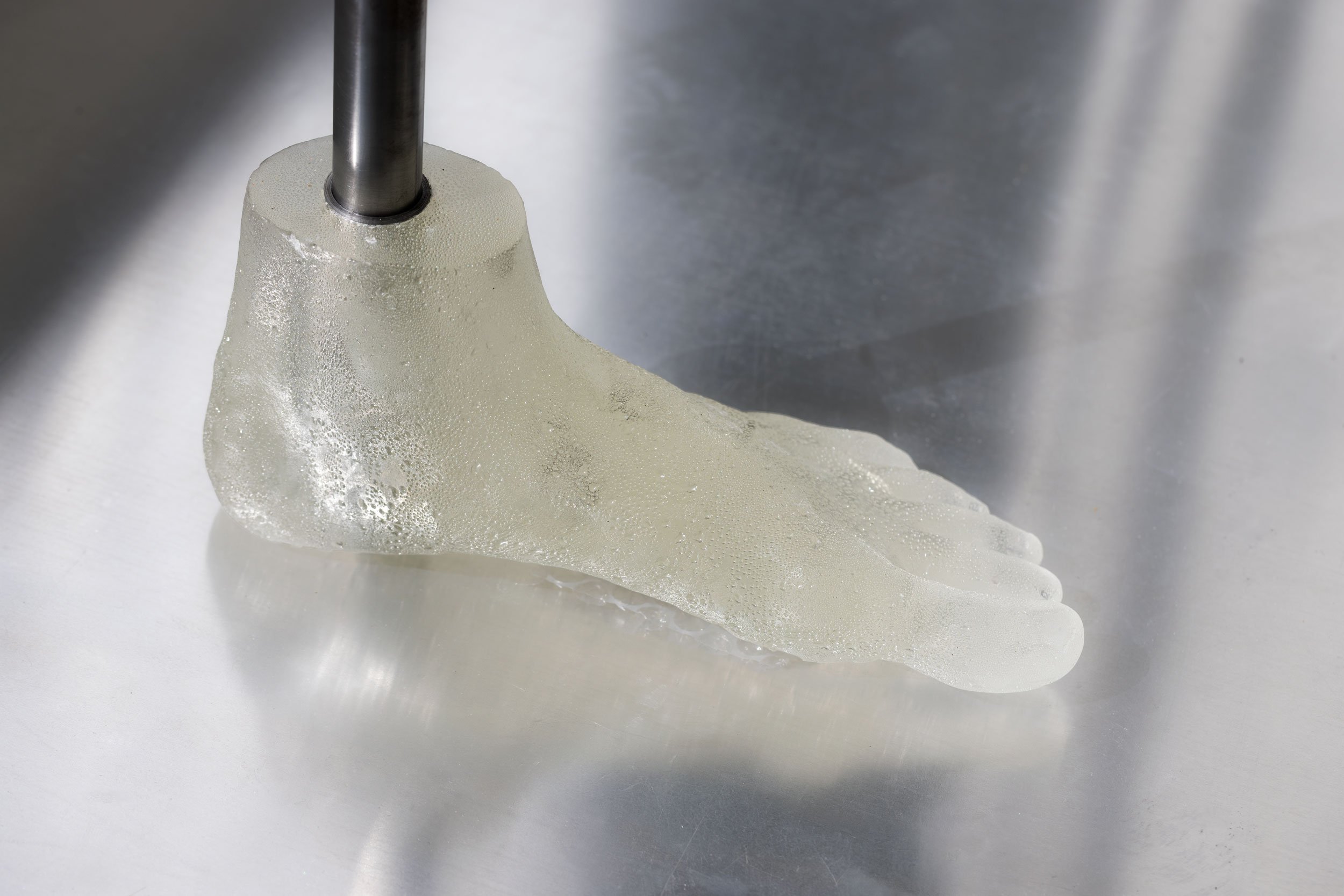
Through fragmentation, repetition and humour, Swedish artist Tilda Lundbohm makes the familiar strange. Her work explores the inseparable relationship between body and mind, questioning our assumptions about strength, independence and control.
When the Body Becomes Unfamiliar
I (Anna Fernsten Nilén) met with Lundbohm (b. 1994) on a sunny day in Copenhagen in June while she was developing Dislocated, her first large-scale installation and solo exhibition. Central to the exhibition is a question that extends into her wider practice: What happens when the body we depend on no longer functions as we expect it to? Working across sculpture, installation, and text, Lundbohm draws on personal experiences, literature, and poetry to explore desire, trauma, mortality, and what it means to inhabit a body.
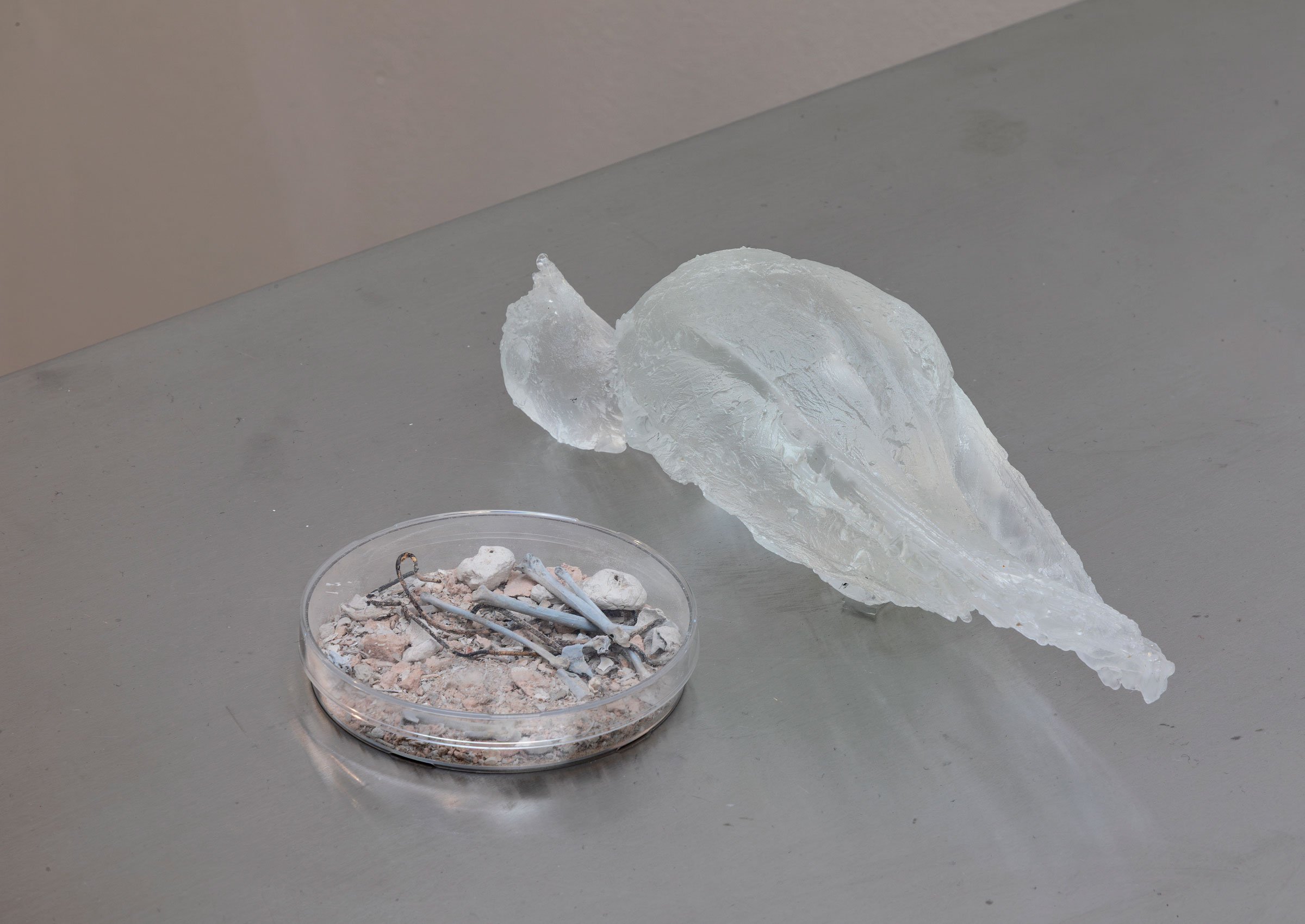
Tilda Lundbohm: Songbirds, 2025. Kirsten Kjærs Museum, 2026. Photo: Niels Fabæk
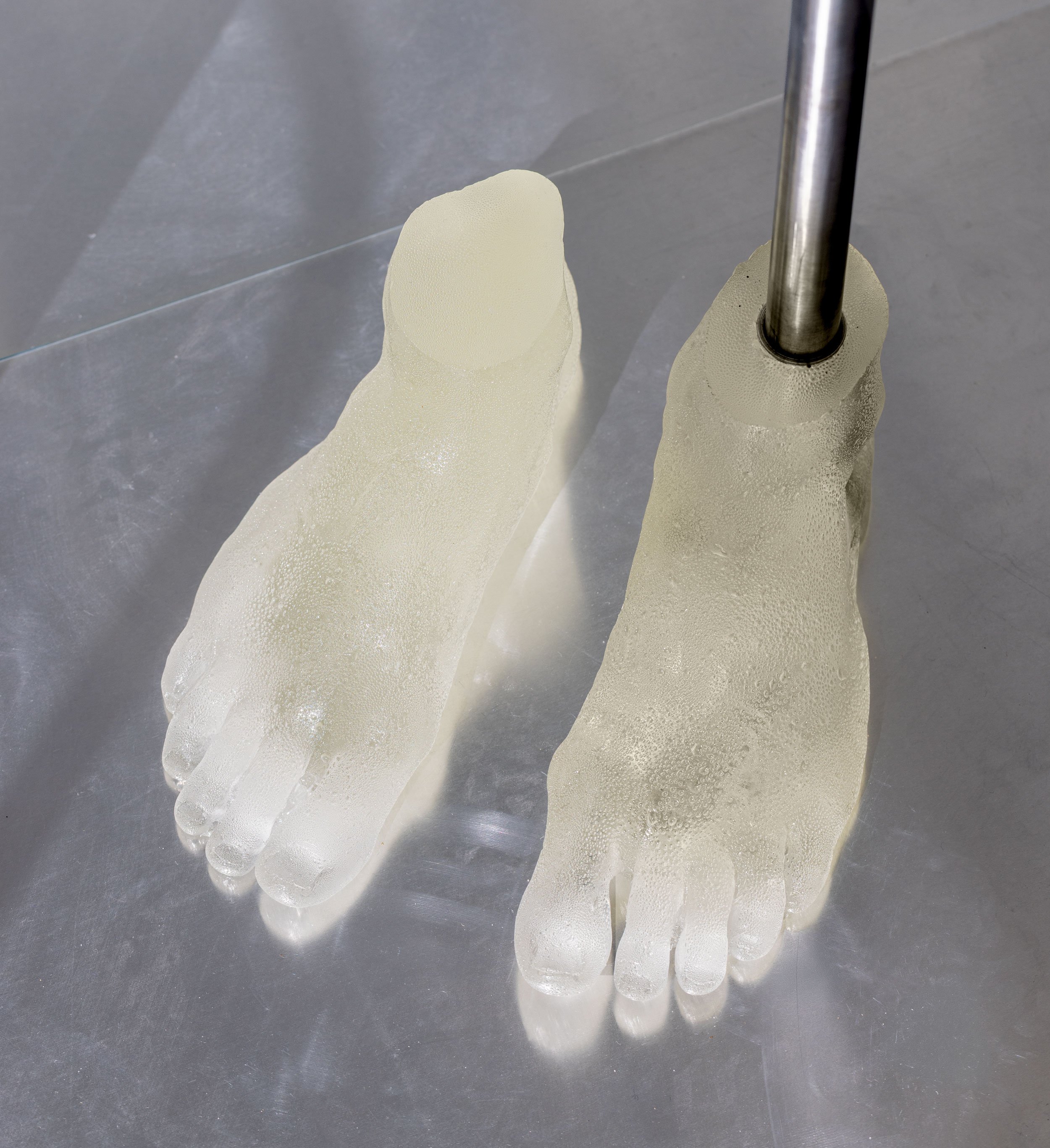
In Dislocated, hands and feet cast in isomalt, a sugar-based material that gradually dissolves emerge from entangled steel structures inspired by children’s playgrounds and outdoor gyms. The body appears simultaneously connected and fragmented, caught somewhere between movement and stillness, care and control. What interests me is how Lundbohm uses these contradictions to question conventional ideas of physical ability and vulnerability, while allowing humour to enter even the most difficult subjects.
Our conversation moves from mental health and melancholia to her fascination with severed feet, the role of poetry and the fragility of the body, exploring why we sometimes need a little light to let the darkness in.
I’m Not Your Therapist
Anna: I once asked you, because your work is so personal, if you saw it as a form of therapy. And you gave me a very hard no. I've actually been thinking about it ever since. It reminded me of something Marina Abramović has said: that art may emerge from personal experience without becoming therapeutic—that it can transform something private into something shared.
And I find that really interesting in relation to your work. Do you think of your work more as a language, or as a way of giving form to things that might otherwise remain difficult to say?
Tilda: I work with my own history of mental illness. As a child and teenager, I spent time in a lot of different institutions, and now I work with memories from that part of my history.
I really believe it can be hard to make interesting art about trauma or difficult experiences if you haven't healed yet.
Tilda Lundbohm
For me, the reason I'm so firm about saying, "Okay, this is not therapy," is that I really believe it can be hard to make interesting art about trauma or difficult experiences if you haven't healed yet.
So for me, it's like: no, it's not therapy. I've done the therapy first.

Tilda Lundbohm: Memory Machine. Photo: David Stjernholm
Anna: You didn't try to mend yourself through crazy sculptures.
Tilda: Right. Because I really think you need to have overcome something, or at least gained some distance from it, to be able to make art that can also become interesting or meaningful for other people.
If I'm deeply inside something really difficult, I won't be able to share that story in a way that can reach other people.
Anna: Because you haven't distanced yourself from it yet?
Tilda: Exactly. So in that way, it's not therapy. I do the therapy with my therapist.
Anna: And art is for something else.
Tilda: Yeah. Art is for something else.
Speaking With, Not At
Anna: In relation to that question, you also did an exhibition at Kongegaarden, together with five other artists, where you showed the work Mechanical Sea. You created workshops around the piece and invited young people in, sharing both your personal story and the context of the work.
Tilda: The biggest piece I made before that exhibition was really about myself and my own story. So for Kongegaarden, I wanted to step a little bit outside myself and talk about mental health in a broader perspective.
The exhibition space is in Korsør, which is a smaller town southwest of Copenhagen, and in that area there are a lot of young people struggling with mental health. So I wanted to speak with them—not just to them—about questions around mental health.
I treated the work more as a conversation starter than I had treated my earlier work.
Anna: So it was also an experiment in how you could evolve your practice?
Tilda: Yeah, exactly. And then I did these workshops with young people about feelings and how to talk about your feelings.
Anna: I also find the work itself really interesting. It's a kinetic machine with fabric that looks like waves. And you connected the waves to feelings—to that feeling you have inside.
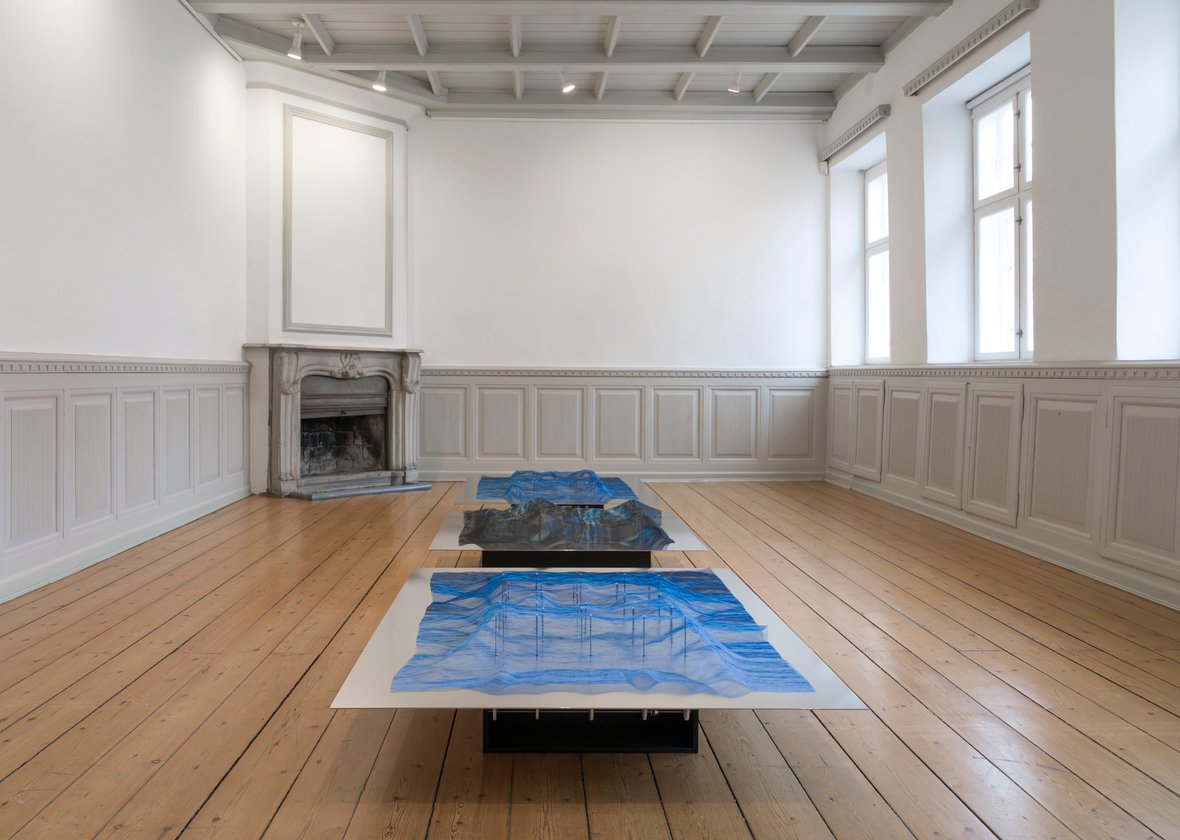
Tilda Lundbohm, Mechanical Sea, 2026. Kunsthal Kongegaarden. Foto: Julie Nymann
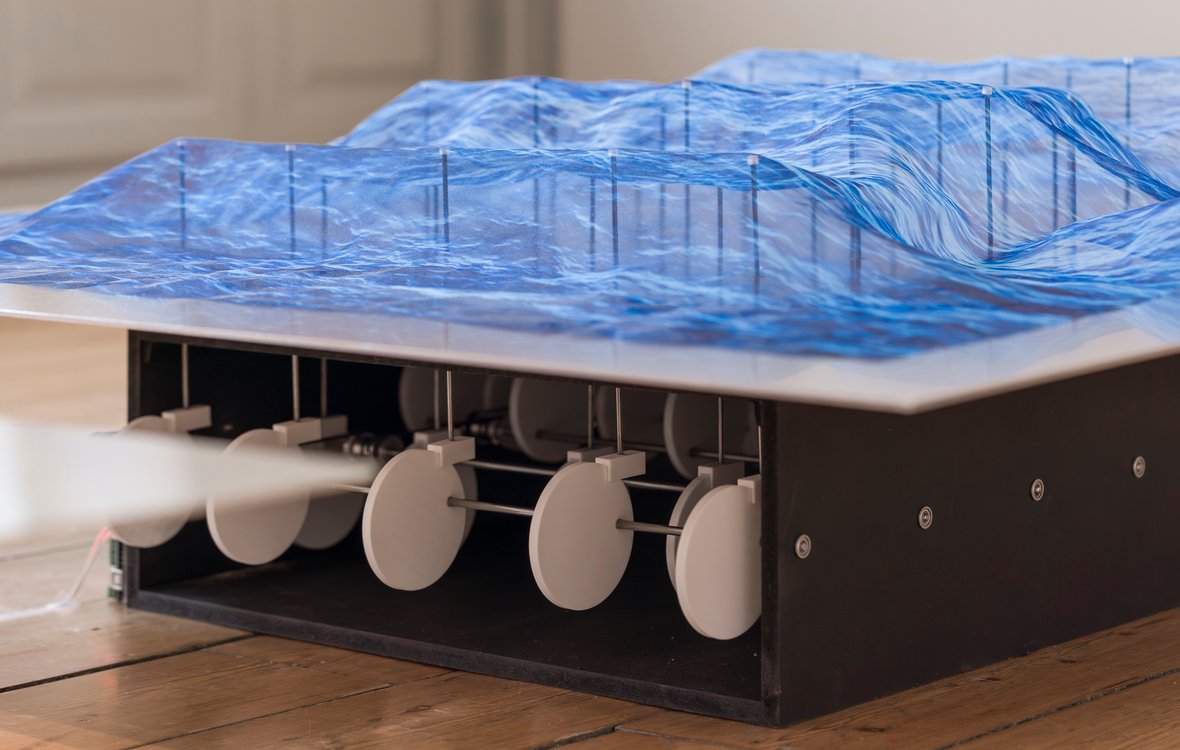
Tilda Lundbohm, Mechanical Sea, detail, 2026. Kunsthal Kongegaarden. Foto: Julie Nymann
Tilda: Literally just like waves. You're always talking about anxiety coming in waves. It will get better. It's a wave. You just have to wait.
But I have to say that it was really important for me to always have a teacher or pedagogue present during the workshops. I didn't want to come in, talk about something difficult, open something up, and then just leave.
I wanted someone to stay with them and continue the conversation afterwards. That was really important to me.
A Quite Melancholic Feeling
Anna: Apart from working with sculpture and kinetic sculpture, you also work a lot with text. There is something about your texts that feels very open and direct, almost childlike—as if you write completely without a filter. But at the same time, they feel precise and carefully constructed, a little like your sculptures.
How do you think about language and words in your work? Are they a structure for you, a material, or something else?
Tilda: I've always been interested in poetry. I've read a lot of poetry, and I've also written myself. That's actually how I started making art.
When I was younger, I wanted to be an author, and I was writing a lot of poetry. Then I started illustrating the poetry—making small pictures to accompany my texts.
And then the pictures became bigger, or they became a bigger part.
Anna: Bigger than the text?
Tilda: Exactly, and then I became an artist. But I still use words.
One of my biggest inspirations is the poetry and literature that I'm reading.
Tilda Lundbohm
One of my biggest inspirations is the poetry and literature that I'm reading. When I'm reading something I really like, I get a feeling or an atmosphere—something I want to recreate in my artwork.
It's the feeling in the poetry that I want to somehow make again. I want someone else to feel what I felt when I was reading it.
It's not like I read poetry and get ideas for topics to work around. It's more like this abstract feeling.
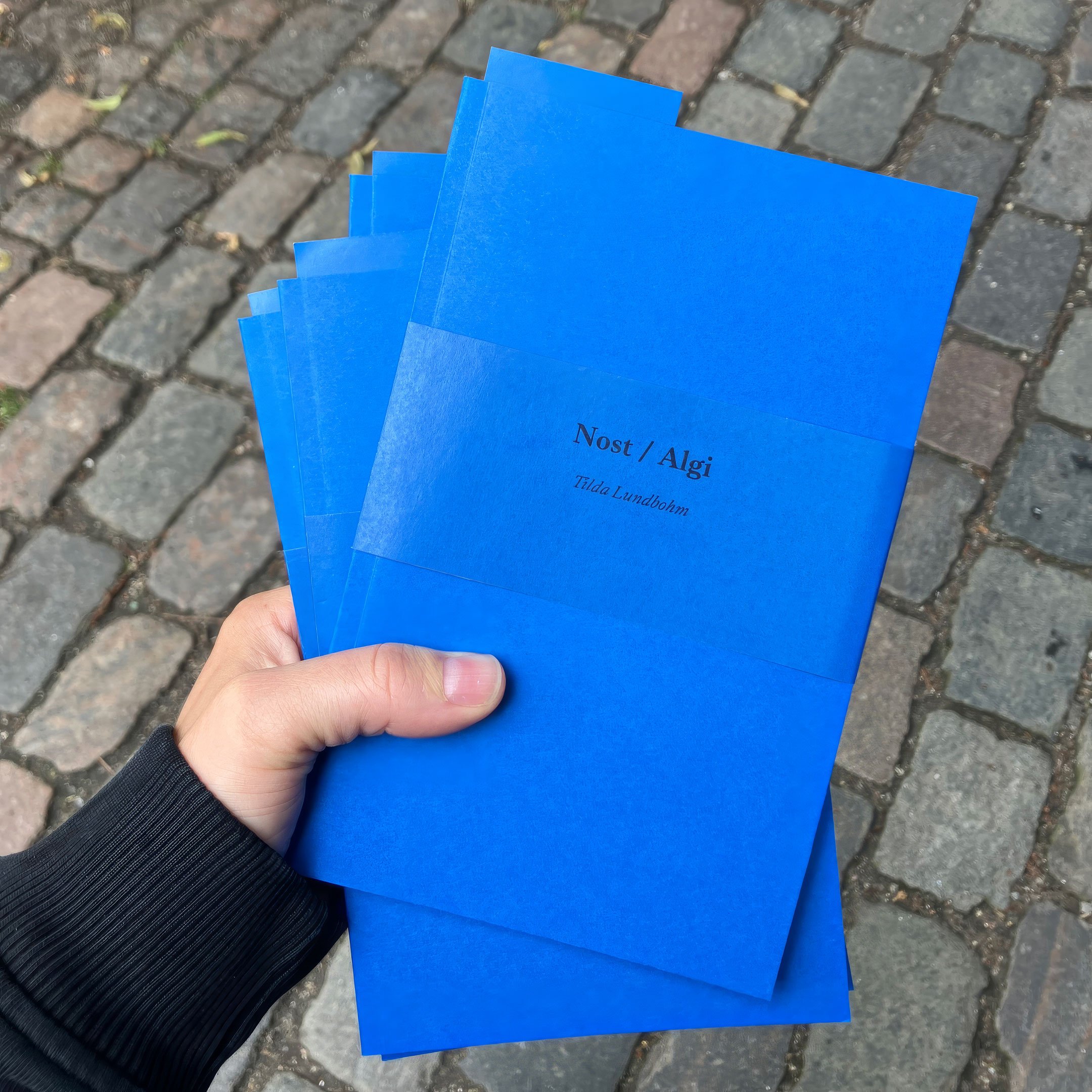
Tilda Lundbohm: Nost / Algi, 2024. Essey, 120 pages. Credit: Tilda Lundbohm
Anna: It's kind of like when somebody says, "I just want to be happy," but then there is a whole construct around what happiness is. What is it?
Tilda: I guess it's this intangible feeling.
Anna: Where it fills you up, and it can be sadness or anxiety or a complete feeling of happiness, radiating.
Tilda: I just want the audience to get the same feeling I got, in a way. And that's often a quite melancholic feeling.
Texts are really important for me. I still write a lot, in different ways, and I also combine writing with my artworks. I've done a lot of embroideries with text.
For my degree piece, I made six sculptures. And I paired them with texts. The texts were my own memories from different treatment centres in Sweden.
The sculptures were quite poetic and abstract, while the texts were very direct: this happened, this happened, this happened. They were quite clear and almost dry in a way, I was trying to write these stories without putting emotion into them.
Anna: And putting the emotion in the sculptures instead.
Tilda: Precisely.
Alive
Anna: There is one work in particular that really stayed with me, and it still does. There are a lot of butterflies in it that you mounted on this kinetic machine, and only one of them was moving—flapping its wings. And the piece is called Alive.
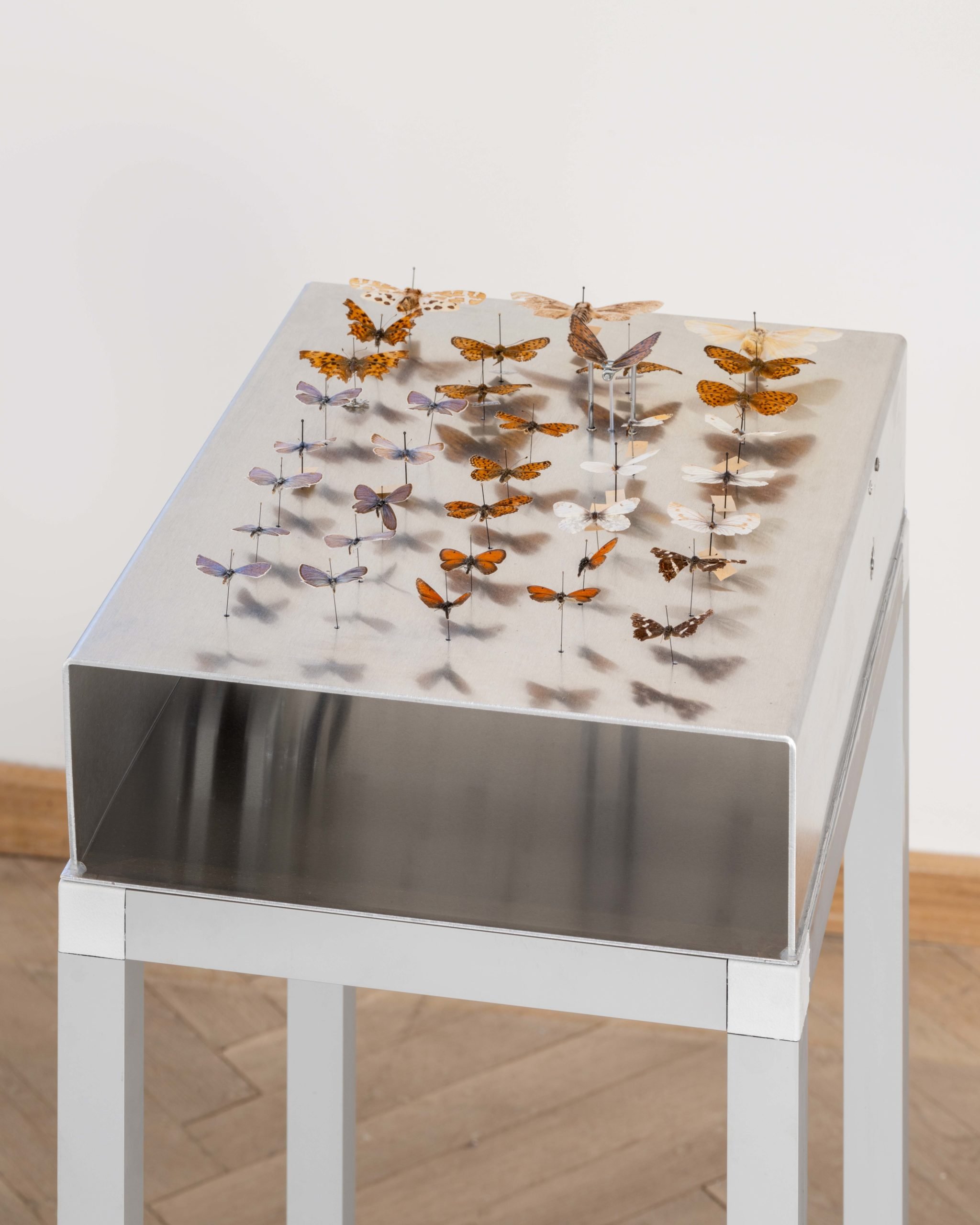
Tilda Lundbohm: Alive. Afgang2025. Photo: David Stjernholm
Tilda: It was a kind of butterfly collection, and there was one alive—one that had survived.
The work was also inspired by a text I had written. I've lost a lot of friends.
When you’re spending a lot of years in institutions, you meet a lot of people and become friends with people who are struggling with quite serious issues, and many of them are not alive today.
So I was working with this idea of being the one who is still alive.
And also with how the healthcare system keeps people alive in different ways. There was something mechanical about it—the idea that you can remain alive in a mechanical way, perhaps.
Temporary and Subject to Decay
Anna: And I would love to move on to Dislocated. It's your first large-scale installation and solo-exhibition shown at SIC | Sharing is Caring in Copenhagen.
Do you want to talk about what this project means to you? And also describe it?
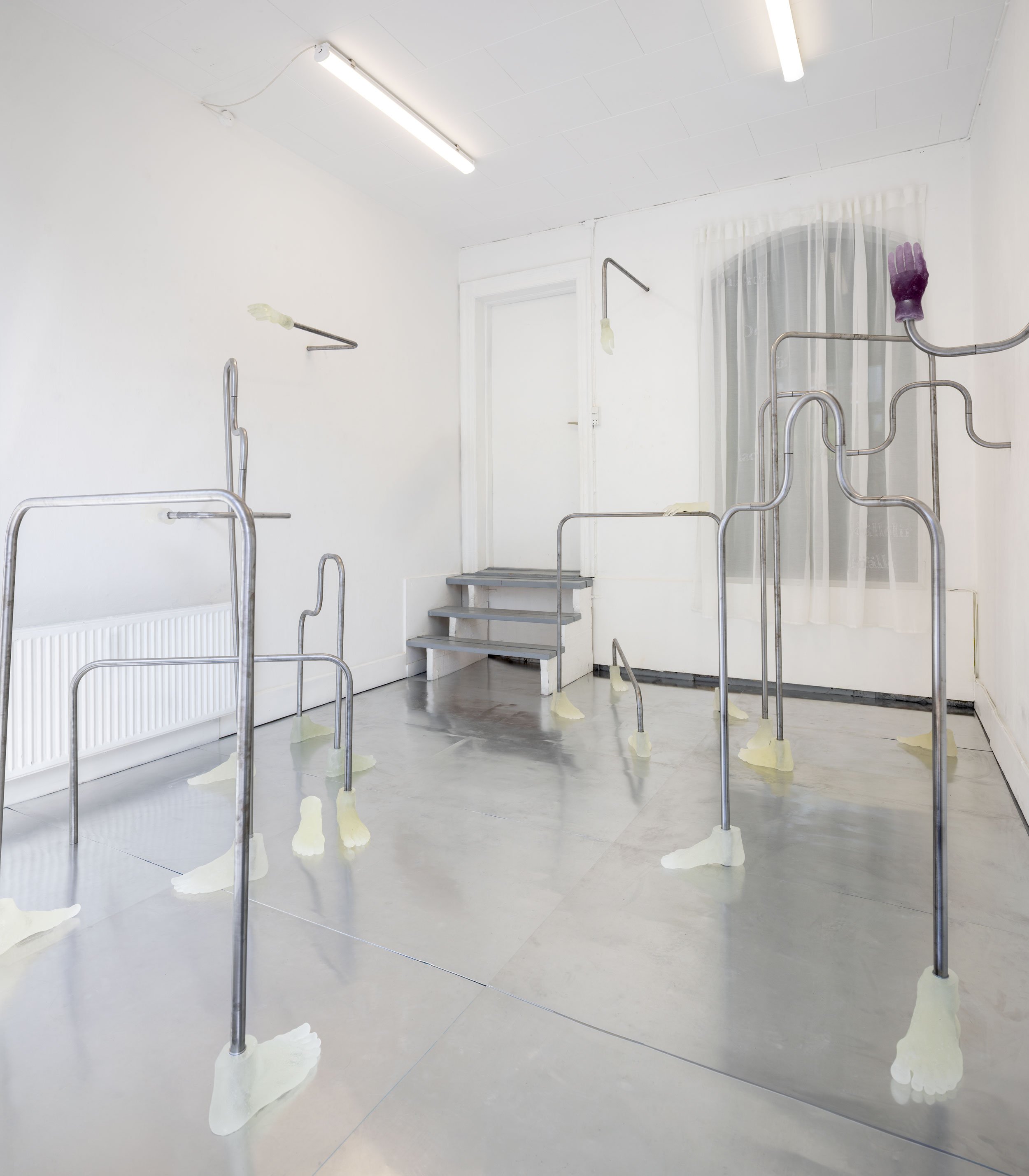
Installation view of Tilda Lundbohm’s exhibition Dislocated at SIC | Sharing is Caring in 2026. Photo: Jan Søndergaard
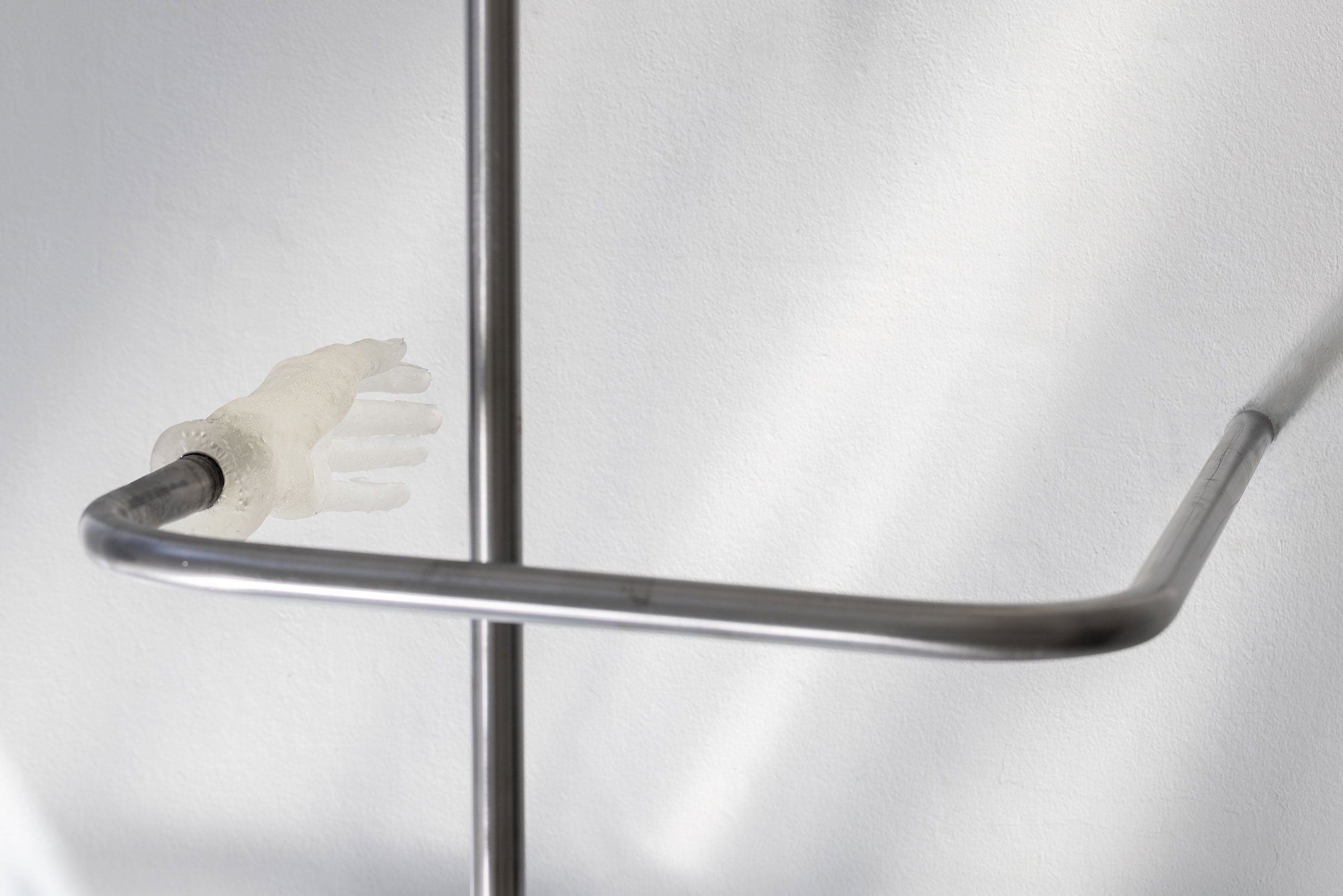
Detail from Tilda Lundbohm’s exhibition Dislocated at SIC | Sharing is Caring in 2026. Photo: Jan Søndergaard
Tilda: Dislocated is a big installation consisting of isomalt. Isomalt is a type of sugar—it's like a sweetener, so it's not real sugar, but you can eat it. It looks like glass. It's semi-transparent.
I'm have casted hands and feet in this isomalt, and then I connected them with metal pipes.
The metal pipes are bent and entangled with each other, like a maze or a kind of chaos. I wanted to create a large body with a lot of hands and feet that seem to merge into one another.
I think of it a bit like the brain—there's no order, it's just chaotic.
Anna: And it's also fragile.
Tilda: Yeah. The material melts and deforms, and I think it mirrors the body in a way—that we are also temporary and subject to decay. It's not going to be there forever.
There's also something about the contrast between the metal pipes and the fragility of the isomalt.
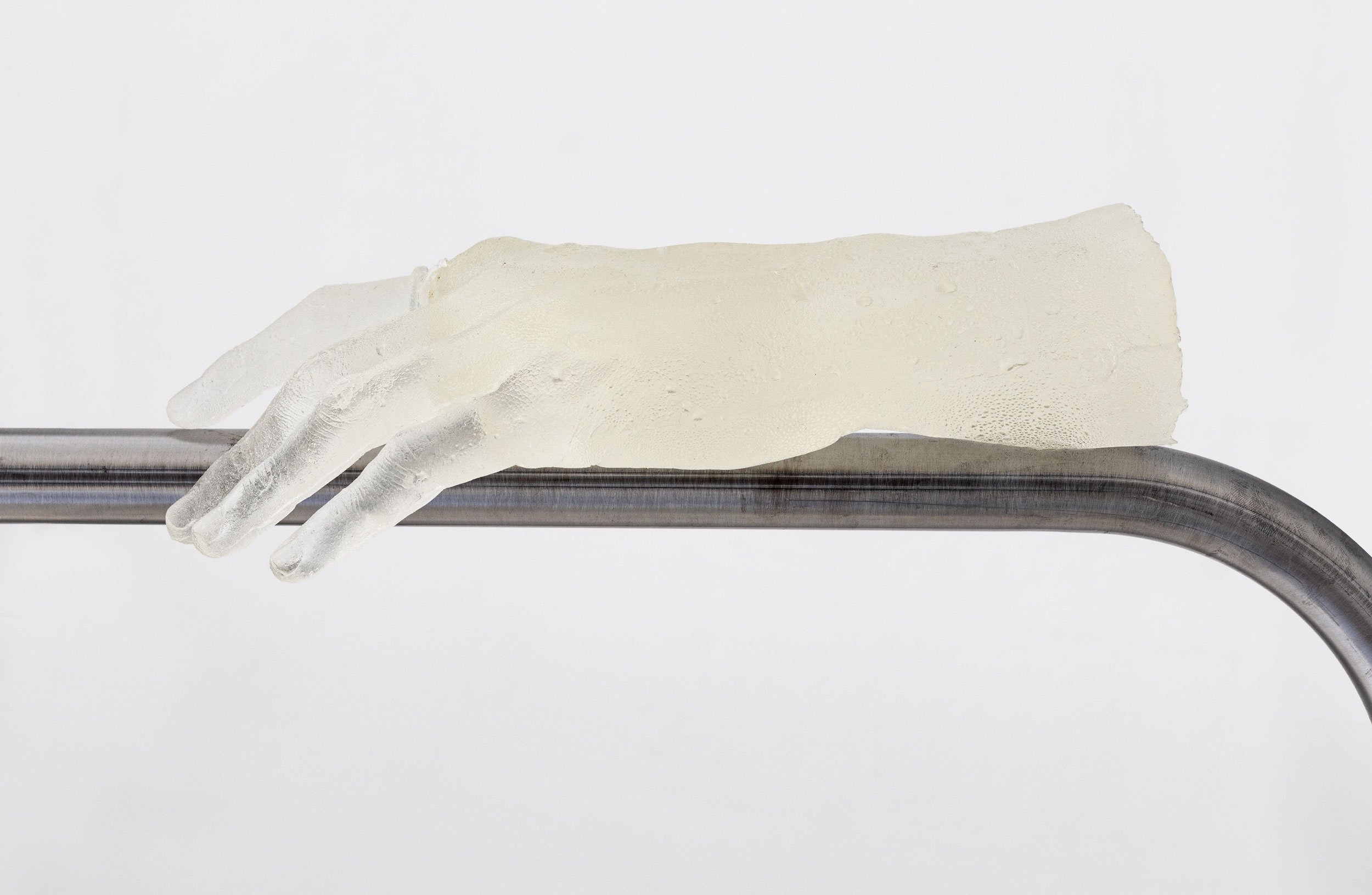
Detail from Tilda Lundbohm’s exhibition Dislocated at SIC | Sharing is Caring in 2026. Photo: Jan Søndergaard
Detached Grounding
Tilda: The hands and feet are actually something I've been working with for such a long time. They keep coming back to me. It took me many years to understand why I was so interested in these body parts.
For me, feet are a symbol of grounding. You can walk, you can stand, you are able to do things. They're a symbol of having a mind and a body that can function in the world. And they're also a symbol of movement—both back and forth.
But all my feet are disconnected from the body. They're cut-off feet. So I'm working with them because they represent that function while simultaneously lacking it.
And the hands are also always cut off. They're not connected to the body either.
I think hands are interesting because they are both the thing that gives you care and the thing that controls you.
Tilda Lundbohm
I think hands are interesting because, especially in healthcare, they are both the thing that gives you care and the thing that controls you. Not only in healthcare, of course.
There's a duality in hands—they protect you, they care for you, but they can also represent violence. That's also why I work with gloves as a symbol. It's a similar duality. Gloves protect the hand, but they also protect whatever the hand is going to touch.
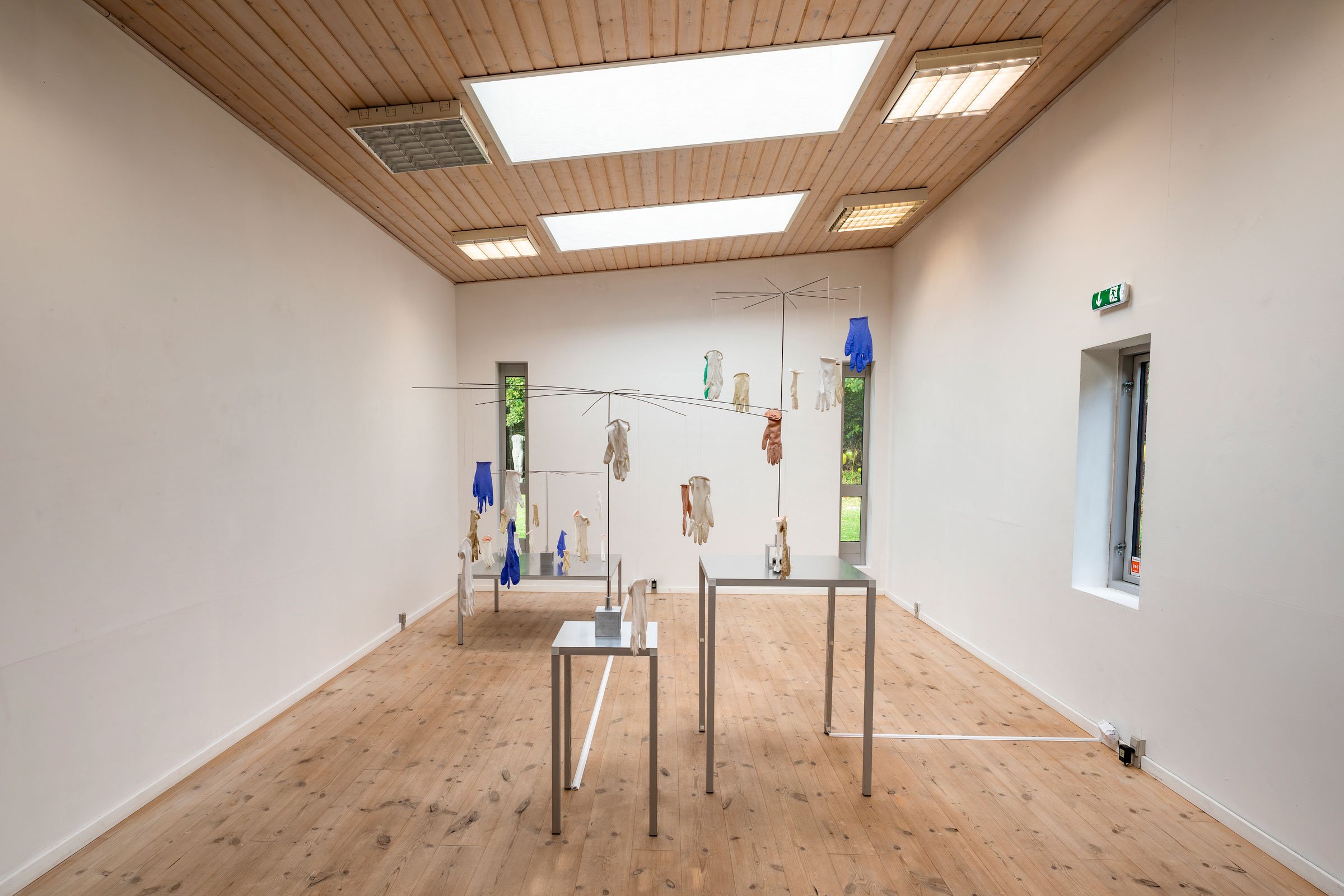
Tilda Lundbohm: Memory Machines - Memory-Go-Round, 2025. Kirsten Kjærs Museum, 2026. Photo: Niels Fabæk
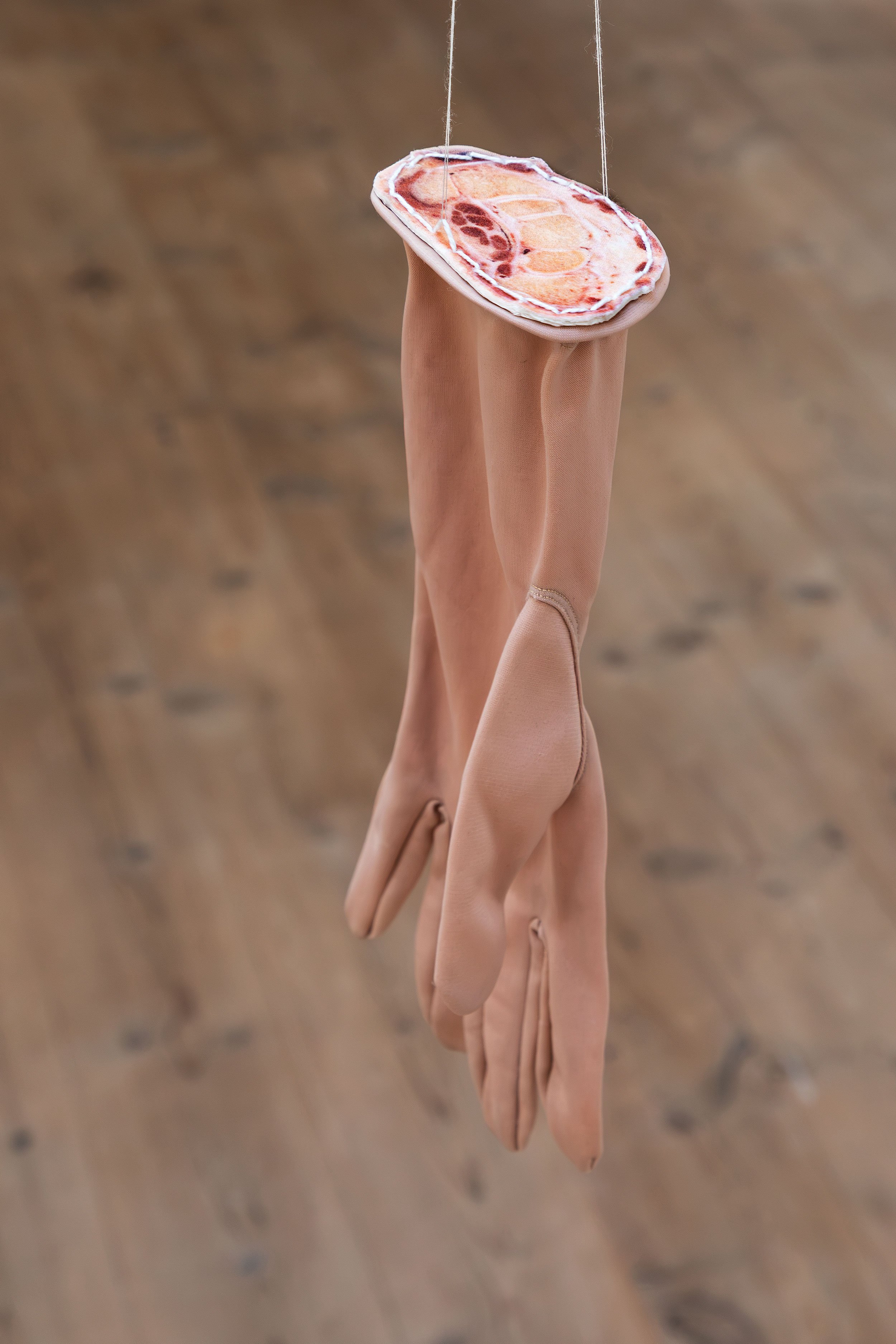
Tilda Lundbohm: Memory Machines - Memory-Go-Round, detail, 2025. Kirsten Kjærs Museum, 2026. Photo: Niels Fabæk
Anna: Historically hands are going back through art history. Even in huge murals and frescoes, hands are often doing or pointing at something. They become symbols in themselves.
Tilda: Yeah, exactly. The hand is just so human.
And there is this duality. It's the hand that takes care of someone, but it's also the hand that can cause violence. It's both things at once.
Mental health is deeply connected to the body, and the body is deeply connected to the mind. I can't really separate them.
Tilda Lundbohm
The Body and the Mind
Anna: And you've also talked about how the metal pipes symbolise an outdoor gym.
Tilda: Yes, that's true. The forms I've bent the pipes into are inspired by outdoor gyms and children's playgrounds.
There's also something about this body that isn't able to function in the world as it exists today, and yet it's still forming these structures associated with movement and exercise.
Anna: Your recent work has been very much about mental health, and this project feels much more focused on the body—on how we perceive our bodies, the body's functionality, having a body that works and having a body that doesn't work. How did that interest come in?
Tilda: I actually see it as the same thing. The body and the mind are connected.
Mental health is deeply connected to the body, and the body is deeply connected to the mind. I can't really separate them.
If you're severely mentally ill, of course your body is affected as well. I've worked a lot in healthcare institutions, and we once had a man who had struggled with severe mental health issues. Twenty years earlier, he had decided to stop walking.
And today he can't walk because he simply hasn't used his legs for twenty years.
It started with mental health, but today he's in a wheelchair and physically unable to walk. It's an extreme example, but it illustrates how connected the body and mind really are.
Entering the Body
Anna: It's the first time you're working with an installation on this scale. Is there something that changes for you when people are actually able to walk into the installation?
Tilda: To be honest, mostly I have to think about practical things.
Anna: How to bend 140 meters of steel pipes? …
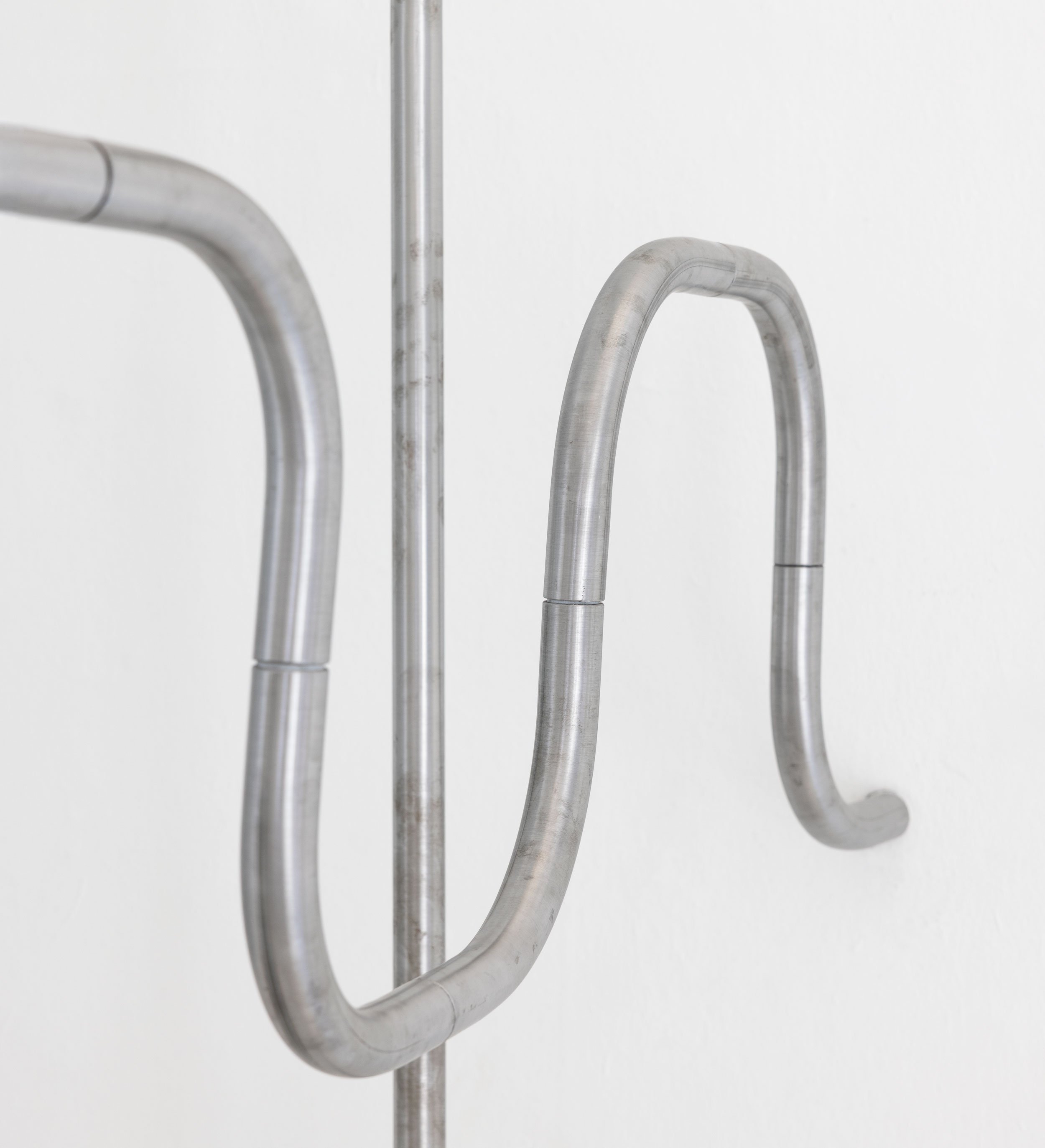
Detail of Tilda Lundbohm’s Dislocated. Photo: Jan Søndergaard
Detail of Tilda Lundbohm’s Dislocated. Photo: Jan Søndergaard
Tilda: Yes! Of course, you're going to see the installation from different perspectives, but there are also a lot of practical questions. How do you make people move around and through the installation without damaging the work—or damaging themselves?
So in that way, it's very practical to think about making this interactive installation. And you can also eat it.
Anna: I don't think people are going to storm in and eat the feet.
Tilda: Are you sure? There are a lot of weird people. Haha
Humour is a tool to get close to people and to get people touched by the work. Because if you only have a sad story, people will lock down. People will not take it in.
Tilda Lundbohm
We Need Some Light
Anna: Your work deals with some very heavy subjects. And you've also talked about wanting to share this sense of melancholy.
But at the same time, you always use humour. There is always a humorous twist in your work—and, I think, in you as a person as well.
Tilda: I mean, humour is a tool to get close to people and to get people touched by the work. Because if you only have a sad story, people will lock down. People will not take it in.
You always need some light, something fun. You need some light to get touched.
Anna: To get under their skin a little bit.
Tilda: Yeah, exactly. And also for myself, because I need to have fun.
I can't work with these really heavy topics and sit in my studio alone being sad. I need to have fun to be able to do this.
About
Tilda Lundbohm (b. 1994, Sweden) graduated from the Royal Danish Academy of Fine Arts with an MFA in 2025. She lives and works in Copenhagen.
Tilda Lundbohm works at the intersection of sculpture, installation and text, exploring language, the body and existence. Through a diverse range of materials, techniques and kinetic elements, she investigates fundamental questions of human needs, desires, trauma and mortality.
Drawing on her own experiences, she transforms the personal into sensory works and installations.
